
When a couple has been trying to conceive for some time without good news, many people think first of the woman. In reality the cause may lie with the man, the woman, or both, and male factors account for a considerable share, so partners should be assessed together.
Male infertility often causes no obvious symptoms; it is frequently discovered only after a semen analysis shows a low sperm count, poor sperm movement or abnormally shaped sperm. Others worry about their fertility because of a scrotal lump, testicular pain, or a history of testicular surgery or infection.
This article focuses on the male side, covering common causes, semen analysis and the assessment a urologist may arrange, and the situations in which it is better to seek care early. If you also have scrotal swelling or a lump, see the article on scrotal swelling.
Key points: Infertility can arise from the man, the woman or both. On the male side, abnormal semen quality is common, but in many cases no cause is found. A varicocele, testicular problems, infections, difficulty ejaculating, hormone problems, smoking, alcohol, excess weight and some medicines can all affect sperm. Partners are advised to be assessed together, and the man usually starts with a semen analysis; if there is a history of testicular surgery or disease, or a scrotal lump or pain, it is reasonable to seek care earlier.
What is male infertility, and does a low sperm count mean infertility?
In general, a couple is assessed for infertility only when they have had regular sex without contraception for a period of time and have not conceived. Male infertility refers to the factors on the man’s side, most commonly abnormal semen quality, which includes a low sperm count, poor sperm movement or abnormally shaped sperm.
Can a man with a low sperm count still conceive naturally?
Possibly. A low sperm count can make conceiving harder, but natural conception can still happen, and a semen analysis looks at more than the count; it also looks at movement and shape. Results need to be read by a doctor together with the couple’s situation, and judging yourself from a single figure is not advised.
What are the common causes of male infertility?

Abnormal semen quality is one of the common causes. It may appear as a low sperm count or none at all, poor sperm movement, or abnormally shaped sperm. In many men with abnormal semen, no clear cause is found.
The testicles make and store sperm, so damage to them can affect semen quality. Causes include testicular infection, tumours, surgery, injury, or conditions present from birth such as undescended testicle. Another common factor is a varicocele, where enlarged veins in the scrotum may raise the temperature of the testicle and are linked to lower semen quality; see varicocele symptoms and diagnosis and indications for varicocele surgery.
Problems with ejaculation, such as difficulty ejaculating or semen not coming out normally, can also affect conception; past sexually transmitted infections such as gonorrhoea or chlamydia may cause inflammation or blockage of the reproductive tract. After a vasectomy, semen no longer contains sperm, and even a later reversal operation may not succeed.
Hormone problems, such as low testosterone, can also affect sperm production; see the article on low testosterone. In addition, some medicines (including chemotherapy and long-term misuse of synthetic steroids), smoking, heavy drinking, excess weight and workplace exposure to certain chemicals can affect semen quality, and in some cases it may improve after changes are made.
Does wearing loose underwear really help?
A higher scrotal temperature is linked to lower semen quality, so avoiding long periods of sitting, hot baths and tight clothing is often suggested, but whether loose underwear really improves fertility is not certain. Finding the cause and being assessed matters more than any single habit.
| Possible cause | Typical features | Possible assessment |
|---|---|---|
| Abnormal semen quality (unexplained) | Usually no symptoms; found on testing | Semen analysis, repeated if needed |
| Varicocele | Dragging feeling in the scrotum, a bundle of twisted veins that can be felt, or no symptoms at all | Examination, scrotal ultrasound |
| Testicular problems (infection, injury, undescended testicle, tumour, after surgery) | Testicular pain, a lump or a smaller testicle, or a relevant history | Examination, scrotal ultrasound, blood tests |
| Ejaculation problems | Difficulty ejaculating, or no semen coming out on ejaculation | History, urine and other tests if needed |
| Hormone problems | Lower sex drive, tiredness, or no symptoms at all | Blood tests for hormones |
| Lifestyle and medicines | Smoking, drinking, excess weight, or taking medicines that may affect sperm | Review of lifestyle and medicines, discussing changes with the doctor |
Which tests are used for male infertility?
The doctor will ask how long you have been trying to conceive, about your sex life, whether you have had children before, your past illnesses and operations, any history of sexually transmitted infections, the medicines you take, and lifestyle such as smoking, drinking and your work environment, and then examine the scrotum and testicles.
Semen analysis
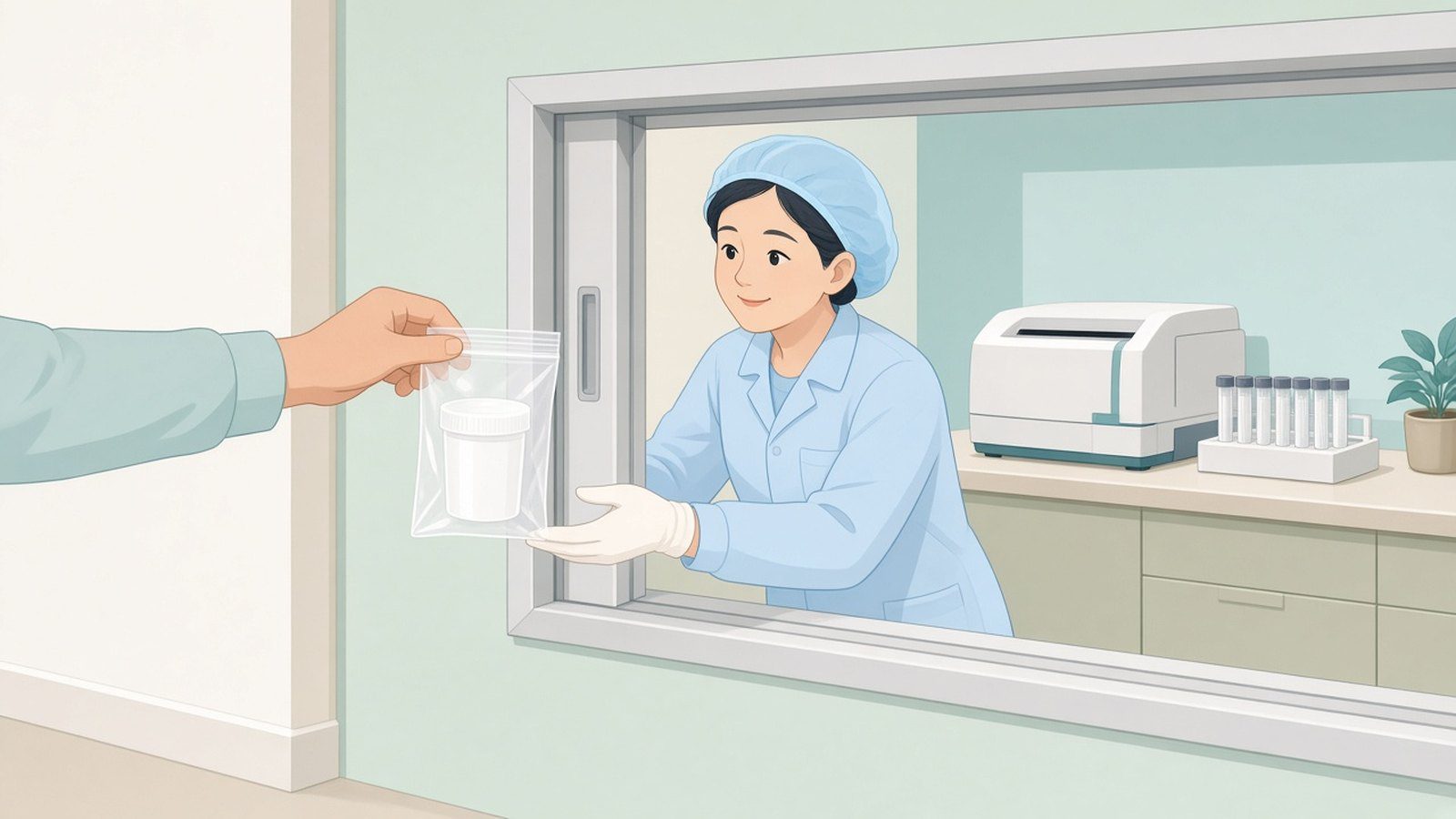
A semen analysis is usually the first test arranged to assess male fertility. It looks at semen volume, sperm count, movement and shape. Before the sample is taken you are usually asked to abstain from ejaculation for a period, and to collect the sample and deliver it promptly as the testing laboratory instructs, so that the result is more reliable.
If the first result is abnormal, the test is usually repeated after an interval to check whether the result is stable before deciding whether further tests are needed.
Further tests
If the semen analysis stays abnormal, the doctor may arrange blood tests for hormones, a scrotal ultrasound or a urine test to look for possible causes, with other tests if needed.
| Test | Main purpose | Possible limitations |
|---|---|---|
| History and physical examination | Understand the history and lifestyle, and examine the scrotum and testicles | May not find the cause directly |
| Semen analysis | Assess semen volume, sperm count, movement and shape | A single result is affected by the abstinence period and how the sample is collected, so it needs repeating to confirm |
| Scrotal ultrasound | Look at the testicles, epididymis and a varicocele | Needs to be interpreted by a doctor together with symptoms |
| Blood tests for hormones | Assess whether there is a hormone problem | Items are chosen based on symptoms and semen results |
| Urine test | Rule out infection or urinary problems | Cannot replace a semen analysis |
How is male infertility managed, and what helps day to day?
Management depends on the cause. If a treatable cause is found, such as an infection or a varicocele, the doctor will discuss treatment options based on the assessment; if medicines or lifestyle are involved, changes will be discussed. In some situations the couple is referred to a reproductive medicine specialist to assess assisted reproduction such as intrauterine insemination or IVF.
While trying to conceive, regular sex and being assessed together with your partner are advised; do not buy supplements of unknown origin on your own, and discuss any product with your doctor before using it.

For daily care, you can keep up regular exercise and a balanced diet, manage your weight, stop smoking and drink less alcohol, avoid medicines of unknown origin, and check whether your work involves exposure to chemicals.
How long without conceiving before a man should be checked?
It is advised that the couple be assessed together, usually when they have been trying regularly for a year without conceiving; if the woman is older, or the man has a history of testicular surgery, infection or cancer treatment, it is reasonable to seek care earlier without waiting a year.
When is it advisable to seek care earlier?
An infertility assessment takes time. In the following situations, do not wait until you have been trying for a year before seeing a doctor:
The woman is older, or either partner is known to have a possible fertility problem.
The man has a history of testicular injury, surgery, infection, undescended testicle or cancer treatment.
A scrotal lump, a testicle that has become larger, harder or smaller, or persistent scrotal pain or discomfort: have it checked promptly.
Difficulty with sex, such as difficulty getting an erection or ejaculating.
A past sexually transmitted infection, or suspected inflammation of the reproductive tract.
Most men have no obvious symptoms, and it is often found by a semen analysis after trying to conceive without success. A few have a scrotal lump, pain or sexual problems, and in those situations it is advised to seek care earlier.
You are usually asked to abstain from ejaculation for a period, collect the sample as the testing laboratory instructs and deliver it promptly. Follow the laboratory’s instructions for the exact length of abstinence and the way to collect.
Not necessarily. A single result can be affected by the abstinence period, how the sample was collected and your health at the time, so the doctor usually repeats the test after an interval and judges once the result is shown to be stable.
Not necessarily. A varicocele may be linked to lower semen quality, but not everyone is affected, and some people have no symptoms at all. Whether it needs treatment is decided by the doctor based on the semen analysis and symptoms.
No. Infertility may relate to the man, the woman or both, and it is advised that the couple be assessed together so that finding the cause is not delayed.
A man can start with a urologist, who assesses the scrotum, testicles and semen analysis; the woman can see a gynaecologist, with referral to a reproductive medicine specialist for joint discussion if needed.
Medical references
- NHS: Low sperm count
- NHS: Causes of infertility
- NHS: Diagnosis of infertility
- MedlinePlus (U.S. National Library of Medicine): Semen analysis
- MedlinePlus (U.S. National Library of Medicine): Infertility
Advice from a urologist
- If you have been trying to conceive for a while without success, have the couple assessed together; the man usually starts with a semen analysis.
- With a history of testicular surgery, infection, undescended testicle or cancer treatment, or if you feel a scrotal lump, it is reasonable to seek care earlier.
- Do not buy supplements of unknown origin on your own; discuss them with your doctor before using them.
- Regular exercise, a balanced diet, stopping smoking and drinking less alcohol help with overall health and daily care.
Male infertility is common and you do not have to worry about it alone; in most cases the cause needs to be identified first so that treatment can be matched to it. Being assessed early together with your partner helps you make the most of your time. If you have been trying to conceive for a while without success, have a urologist assess you in person.