

UROLOGICAL HEALTH
Urological Health Clinic
Difficult urination, pelvic discomfort, frequency or leakage, and worries about STIs or the prostate all deserve a proper check-up. From understanding the condition and testing to treatment and prevention, each patient is personally evaluated by Dr. Hsieh.
Start with your symptoms
Which situation sounds most like yours?
Choose the description that fits best to learn about possible causes and how they are evaluated. Symptoms often overlap, and all of them can be assessed at the same visit.
Chronic Prostatitis
Recurrent pelvic or perineal pain and difficult urination; infection usually needs to be ruled out, with longer-term management.
Learn about prostatitis → "I always need to go and can't hold it"Overactive Bladder and Incontinence
Frequency, urgency, nighttime urination or leakage; behavioral changes, medication or the magnetic chair are discussed based on the type.
Learn about overactive bladder → "I'm worried I caught something"Sexually Transmitted Infections
Syphilis, gonorrhea, genital warts, HIV and more — early testing and treatment also protect your partner.
Learn about STIs → "I'd like a prostate check"Prostate Cancer
What PSA, digital rectal exams and imaging mean, and what to know before screening.
Learn about prostate cancer →Your visit
Find the cause, then treat it
The same symptoms may come from different organs or causes. A thorough evaluation helps avoid repeated treatment without improvement.
-
History
Symptom pattern, duration, medications and lifestyle habits.
- A bladder diary can be kept in advance
-
Tests
Arranged as needed — not every test is necessary for everyone.
- Urinalysis, blood tests (including PSA)
- Urinary ultrasound, post-void residual
-
Discussing options
Treatment options, expected effects and possible side effects are explained.
-
Treatment and follow-up
Adjusted according to your response; chronic conditions need ongoing follow-up.
Conditions and treatment
Care organized by area
From the prostate and bladder to sexual health and prevention, explore each topic to learn about evaluation and treatment options.
Prostate
Prostate conditions
From inflammation and pain to cancer screening.
Bladder
Bladder control
Frequency, urgency and leakage.
Penis
Penile lumps and curvature
Evaluation and management of acquired Peyronie's disease.
Prevention
Sexual health and prevention
Testing, treatment and prevention in advance.
Treatments and results vary from person to person. Whether an option is suitable, and how options may be combined, is discussed after a personal evaluation by Dr. Hsieh.
Warning signs
Seek medical care promptly if you notice these
The following symptoms may need early attention; waiting to see if they pass is not recommended:
- Visible blood in the urine, or tea-colored urine or clots
- Fever with painful urination, back pain or severe perineal pain
- A full bladder but being completely unable to urinate
- Sudden severe pain or swelling in the scrotum or testicles
Private care
Private questions
can be asked with confidence
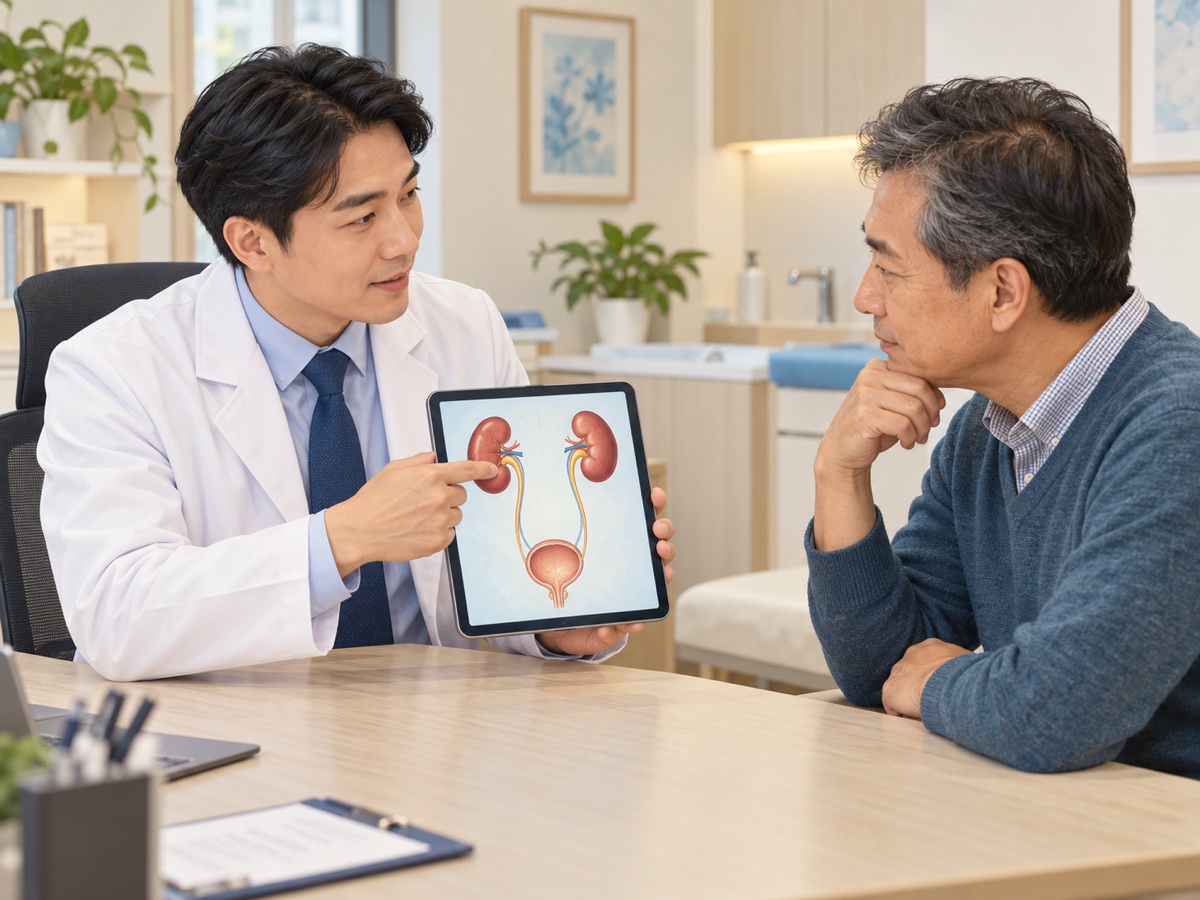
The doctor takes your history in person — no need to describe symptoms in the waiting area.
You can ask about appointments and test preparation in writing first.
For STIs, partner testing and treatment can be discussed when needed.
Kept securely in line with medical regulations and not shared externally.

Attending physician
Dr. Cheng-Hsing Hsieh
Former Chief of Surgery and Chief of Urology, Taipei Tzu Chi Hospital
Former head of urology at a medical center, with many years of experience treating prostate conditions, voiding disorders, STIs and urological tumors, personally overseeing each case from evaluation and treatment to follow-up.
FAQ
Common questions before your visit
Have another question? Feel free to ask about appointments on LINE.
Should I arrive with a full bladder?
If a urine test or bladder ultrasound is needed, a moderately full bladder is helpful. If unsure, ask on LINE first, and avoid holding your urine to the point of discomfort.
Can prostatitis turn into prostate cancer?
There is currently no clear evidence that prostatitis directly causes prostate cancer, but both can raise PSA, so results need to be interpreted by a doctor.
Is frequent urination always a prostate problem?
Not necessarily. Overactive bladder, infection, diabetes, drinking habits or sleep problems can all cause frequency, so a thorough evaluation is needed.
If I suspect an STI, how soon can I be tested?
Window periods differ by infection. After a high-risk exposure, consult early so the doctor can arrange appropriate testing times; within 72 hours of possible HIV exposure, PEP may be evaluated.
Can I just ask via LINE?
LINE is available for appointment and general questions; a personal diagnosis and treatment advice still require an in-person evaluation by the doctor at the clinic.
This page provides health education and does not replace a medical diagnosis. Treatments and results vary from person to person and require a personal evaluation by a doctor.