Penile curvature can be congenital or acquired. Treatment decisions depend not only on the angle, but also on pain, palpable plaques, erectile function, and impact on sexual life. Clarifying the cause and disease stage helps determine whether observation, conservative management, or surgical correction is appropriate.
Curvatures that look similar may have distinct causes and treatment timing. It is important to distinguish congenital from acquired forms and assess any concurrent erectile issues.
Usually recognized after puberty during erections, typically without palpable fibrotic plaques. Treatment depends primarily on functional impairment and personal concern.
Fibrotic plaque formation in the tunica albuginea, often accompanied by pain, palpable nodules, indentation, shortening, or progressive curvature changes.
Penile rigidity and vascular hemodynamics influence treatment selection. Penile Doppler ultrasound and medication responsiveness can be evaluated if needed.
Curvature angle alone does not dictate treatment; clinicians also consider discomfort, impact on intimacy, psychological distress, and patient expectations.
Key factors include the rate of progression, pain, erectile quality, and impact on sexual life—rather than self-judging severity solely by the curvature angle.
If sudden trauma causes a cracking sound, severe acute pain, rapid swelling, or bruising during intercourse, penile fracture must be suspected—seek emergency medical evaluation immediately.
Treatment is guided by whether the condition is congenital or acquired, disease stability, curvature complexity, penile length, erectile function, and individual preferences.
| Modality | Primary Considerations | Limitations & Suitability |
|---|---|---|
| Observation & Regular Follow-Up | Monitor for changes in pain, plaque size, curvature angle, and erectile function. | Suitable for mild symptoms where sexual function and quality of life remain unaffected. |
| Pain Management & Conservative Care | Analgesics during active inflammatory phases; traction or vacuum therapy as adjunctive options for selected patients. | Evidence and suitability are limited; proper usage guidelines and safety must be reviewed. |
| Low-Intensity Shockwave Therapy | Permitted by select clinical guidelines for pain relief during the active phase of Peyronie’s disease. | Should not be expected to straighten penile curvature or eliminate calcified plaques. |
| Tunica Plication / Nesbit Procedure | Shortening the longer convex side of the tunica albuginea to equalize bilateral length. | Best suited for patients with good erectile rigidity and adequate length; potential risks include slight shortening or altered sensation. |
| Plaque Incision & Grafting | Incising the shortened concave side and placing a graft patch over the defect. | Applicable for severe or complex deformities; requires thorough discussion regarding post-operative erectile risks. |
| Penile Prosthesis with Curvature Correction | Simultaneously addresses treatment-refractory erectile dysfunction and significant curvature. | Invasive surgical procedure requiring evaluation of infection risk, mechanical reliability, and revision possibilities. |
Surgery is typically considered only after acquired curvature has entered a stable phase and deformity affects sexual activity. Each surgical technique involves tradeoffs regarding length, rigidity, sensation, and recurrence risk.
Clarifying onset timing, pain, plaques, progression speed, previous trauma or surgery, and impact on intimate relationships.
Reviewing erection photographs or conducting clinical assessment to measure curvature direction, angle, and complex deformities.
Examining plaque characteristics, penile length, and erectile function; scheduling penile duplex ultrasound if indicated.
Weighing the benefits, limitations, risks, and recovery timeline of conservative versus surgical options before finalizing a plan.
The latest articles, topics and tags on this subject for further reading. Content is for general reference; individual conditions require an in-person evaluation by a physician.
Dr. Cheng-Hsing Hsieh brings extensive experience in penile curvature correction and andrological microsurgery, explaining feasible options tailored to your curvature pattern, erectile function, and goals.
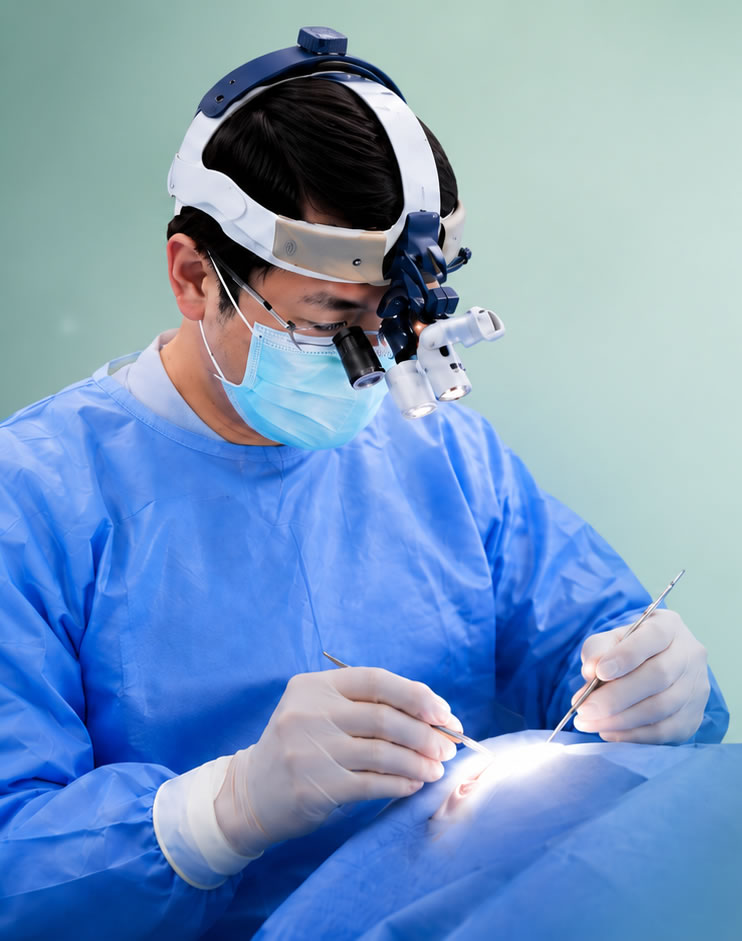
Clinic Director · Attending Urologist
Not necessarily. Mild, stable curvature is common and often does not impair function. However, if curvature develops recently, worsens progressively, causes pain or nodules, or hinders intercourse, a urological assessment is advised.
No. Surgery depends on the underlying cause, whether the condition is stable, the functional impact on intercourse, and patient preference. Mild cases are often managed with observation or conservative care.
Current medical guidelines do not support shockwave therapy for straightening curvature or dissolving fibrotic plaques. In select patients during the active phase of Peyronie’s disease, it may serve as an option for pain relief under physician guidance.
Plication or shortening-type procedures equalize length by shortening the outer side, which may result in a noticeable change in length. Grafting procedures also carry specific risks. Length measurements and realistic expectations should be reviewed beforehand.
Every surgical procedure carries risks of residual or recurrent curvature, altered sensation, discomfort, infection, or changes in erectile function. Actual probabilities depend on individual anatomy, curvature complexity, and surgical approach, which the surgeon will explain in detail.
本頁內容為疾病衛教資訊,非藥品或醫療廣告,無法取代醫師的診斷與治療。每個人的狀況不同,實際檢查與治療方式,請預約門診由醫師當面評估。
Consult directly with Dr. Cheng-Hsing Hsieh. Online booking is not available for same-day visits.