

Urinary incontinence is a clinical symptom rather than a standalone disease. It can occur across all age groups and is not simply an inevitable consequence of aging, although its prevalence increases among older adults. In Taiwan, approximately 21.6% of community-dwelling adults aged 65 and above experience some form of urinary leakage, affecting both men and women. Incontinence causes significant distress, social hesitation, and diminished quality of life. Clinically, urinary incontinence is classified into stress, urge, mixed, overflow, functional, reflex, and total incontinence. Accompanying symptoms often include urinary frequency, urgency, and recurrent urinary tract infections; when combined with chronic conditions such as diabetes, slow urine flow or voiding difficulty may also occur.
Function of the Pelvic Floor Muscles
The pelvic floor muscles form a supportive hammock spanning from the coccyx (tailbone) at the back to the pubic bone in front. They support vital pelvic viscera including the bladder, prostate (in men), rectum, and uterus (in women), preventing organ prolapse. When pelvic floor tone or neuromuscular control diminishes, support for these organs weakens, significantly impairing urethral sphincter closure and bladder storage function, which frequently leads to incontinence.
Kegel Exercises
When voluntarily interrupting urination midstream, one feels an upward contraction in the perineum and anal sphincter—this confirms activation of the pelvic floor musculature. Kegel exercises consist of conscious, repeated contractions and relaxations of these muscles to rebuild tone and endurance, providing a foundation for non-surgical incontinence management.
Magnetic Stimulation Chair: Advanced HIFEM Technology
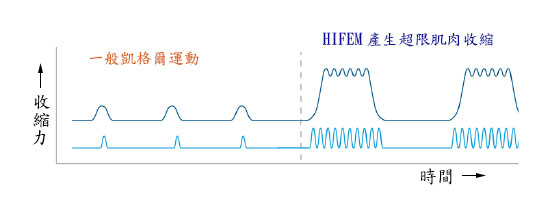
High-Intensity Focused Electromagnetic technology (HIFEM) has become widely utilized for treating both male and female urinary incontinence. Operating on Faraday’s law of electromagnetic induction, HIFEM delivers focused, dynamic magnetic pulses that penetrate deep into pelvic structures. These pulsed fields generate eddy currents that depolarize motor neurons, triggering supramaximal muscle contractions far beyond what voluntary exercise can achieve. Modern magnetic stimulation systems deliver intensities reaching 2.5 Tesla directly to pelvic structures, stimulating muscle fiber hypertrophy, neuromuscular re-education, and stronger urethral support (Figure 1).
Key Features of UI CUBE Magnetic Stimulation
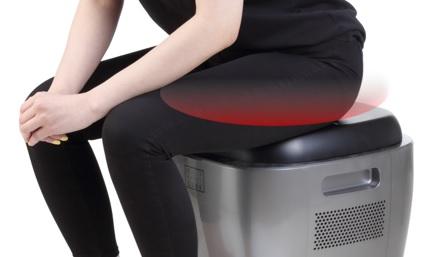
- Non-invasive & Non-contact: Employs focused electromagnetic energy without internal probes or sticky electrodes on the skin.
- Fully Clothed Comfort: Patients remain comfortably seated in their everyday clothes during the entire session, ensuring privacy and ease.
- Efficient Protocol: Each session takes approximately 20 to 30 minutes, usually scheduled 2 to 3 times per week for a typical course of 6 to 10 sessions.
- Intensive Training Equivalent: A single session induces neuromuscular stimulation comparable to thousands of precise Kegel contractions.
- Deep Uniform Penetration: Unlike superficial electrical stimulation, magnetic fields penetrate tissues without resistive energy loss or burning sensation, providing consistent stimulation to deep nerve branches.
Clinical Evidence & Outcomes
Clinical investigations evaluating focused electromagnetic therapy for urinary incontinence report meaningful improvements in patient-reported quality of life, with a high proportion of individuals significantly reducing or eliminating daily pad usage. In published trials, beneficial outcomes were sustained at 6-month follow-up assessments. In a prospective clinical cohort of 75 women experiencing urinary incontinence who completed six HIFEM sessions over three weeks, over 80% reported marked symptom alleviation with an overall 43.9% reduction in pad consumption.
When compared to conventional electrostimulation, HIFEM demonstrates superior depth and patient tolerance. A comparative study of 95 parous women aged 18–45 evaluated 3D ultrasound parameters following HIFEM versus electrical stimulation; the HIFEM cohort exhibited positive structural and dynamic remodeling of pelvic floor architecture alongside marked reductions in stress leakage episodes.
Conclusion
High-Intensity Focused Electromagnetic technology represents a well-tolerated, non-invasive therapeutic modality for managing stress, urge, and mixed urinary incontinence. By enhancing pelvic neuromuscular tone and sphincter control, it helps patients regain confidence and restore quality of life. Individualized assessment by an experienced urologist ensures proper classification of symptoms and optimization of treatment parameters.
References
- Kimberly L. Evans KL, Berenholz J, Samuels JB, Pezzella A, DeLucia CA. Prospective Multi-Center Study on Long-term Effectiveness of HIFEM procedure for Treatment for Urinary Incontinence and Female Sexual Dysfunction. Journal of Women’s Health Care. 2023;12(2):625.
- Barba M, Cola A, Rezzan G, et al. Flat Magnetic Stimulation for Urge Urinary Incontinence. Medicina (Kaunas). 2023;59(11):1999.
- Braga A, Castronovo F, Caccia G, et al. Efficacy of 3 Tesla Functional Magnetic Stimulation for the Treatment of Female Urinary Incontinence. J Clin Med. 2022;11(10):2805.
- Silantyeva E, Zarkovic D, Astafeva E, et al. A Comparative Study on the Effects of High-Intensity Focused Electromagnetic Technology and Electrostimulation for the Treatment of Pelvic Floor Muscles and Urinary Incontinence in Parous Women. Female Pelvic Med Reconstr Surg. 2021;27(4):269-273.
- Samuels JB, Pezzella A, Berenholz J, Alinsod R. Safety and Efficacy of a Non-Invasive High-Intensity Focused Electromagnetic Field (HIFEM) Device for Treatment of Urinary Incontinence and Enhancement of Quality of Life. Lasers Surg Med. 2019;51(9):760-766.