
Suddenly leaking a little urine when you cough, sneeze, laugh or lift something heavy, or feeling a sudden urge and wetting before you reach the toilet — many people say it is just ageing, or feel too embarrassed to talk about it.
Urinary incontinence means urine leaks without control. It is a symptom, not a single disease. It can affect young adults, people after childbirth, those around menopause and older adults, in both women and men. Most people improve with proper assessment and care, but if you cannot empty, see blood in the urine, get repeated infections, or have a neurological history, pads alone are not enough.
This article explains in plain language what urinary incontinence is, how common types differ, why leakage happens, how it differs from frequent urination and urinary retention, which tests are used, what you can try day to day, and when to seek care promptly. Clinic pages about device-based pelvic-floor treatments are separate; this FAQ does not repeat device marketing.
Key points: Urinary incontinence means involuntary urine leakage; it is not an inevitable part of ageing and is not something you need to be ashamed to discuss. Common types include stress, urgency, mixed and overflow incontinence; each points to different checks and care. Stress leaks with abdominal pressure; urgency is a sudden need you cannot hold; overflow is a bladder that does not empty and dribbles. Leakage is not always weak pelvic floor — infection, stones, residual urine from prostate enlargement, nerves or medicines may be involved. Seek care promptly if you cannot void, have clear blood in the urine, fever with back pain, new neurological symptoms, or major impact on daily life.
What is urinary incontinence?
The International Continence Society (ICS) defines urinary incontinence as the complaint of involuntary loss of urine. The key is loss of control, not how often you feel the urge — some people void often without leaking; others leak only a few drops a day and find it very distressing.
In clinic, doctors also ask:
- When does it leak? (with effort? with urgency? continuous dribbling?)
- How much and how often, and do you need pads?
- Is there frequent urination, night voiding, burning, blood in the urine, a weak stream or a feeling of incomplete emptying?
- History of childbirth, pelvic surgery, prostate surgery, stroke, diabetes or long-term constipation?
These details help more than the word incontinence alone. It is more common with age, but it is not normal ageing. People after childbirth or menopause, and men after prostate surgery, are also often seen in clinic.
What types of urinary incontinence are there?
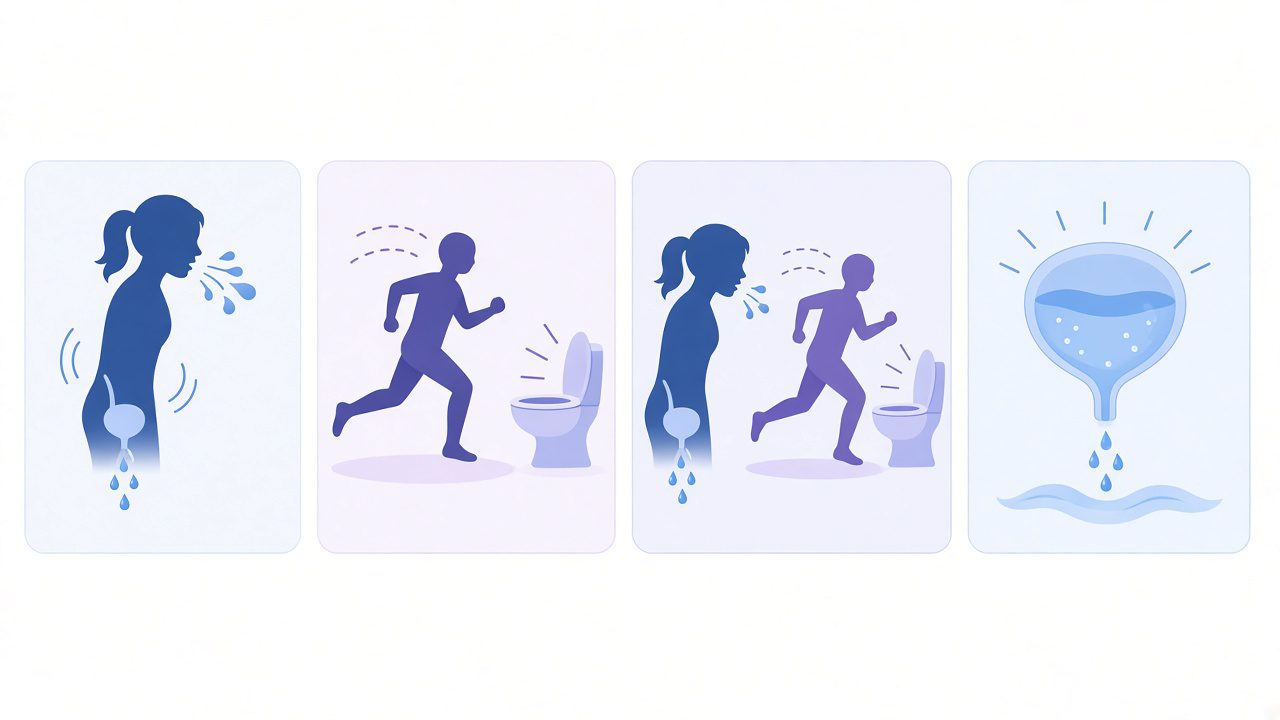
Online and older articles often mix the names stress versus effort, and overflow versus dribbling. The table below lines up the wording people usually search for:
| Type (common names) | Typical pattern | Common related directions |
|---|---|---|
| Stress urinary incontinence | Leaks with cough, sneeze, laugh, running, lifting or straining to pass stool | Weaker pelvic-floor or urethral support; after childbirth, menopause or pelvic surgery; also possible after prostate surgery in men |
| Urgency urinary incontinence | A sudden strong urge; leaks before reaching the toilet; often with frequency and nocturia | Often linked to overactive bladder; infection, stones or nerve factors may also play a role |
| Mixed urinary incontinence | Both stress and urgency patterns | Common around menopause; which bother is worse guides the order of care |
| Overflow incontinence | A full bladder that does not empty well; urine dribbles out; may have a weak stream or residual feeling | Blockage or weak bladder muscle — for example prostate enlargement, neurogenic bladder or medicine effects |
| Functional and other | Slow mobility, hard-to-find toilets or cognitive limits — the urge arrives but you cannot get there in time | Older age, limited mobility or environment; still exclude treatable urological causes |
Older texts may mention rarer labels such as reflex incontinence. In everyday clinic, clarifying the main types above is enough. If you also have frequency or urgency, compare with Frequent urination and nocturia; if the bladder feels so full you almost cannot void, consider urinary retention (Chinese page) — that is a different red-flag path.
Why does urine leak, and who is more likely to have it?
Causes often involve storage, emptying, or both:
- Insufficient pelvic-floor and urethral support: pregnancy, vaginal birth, long-term straining with constipation, obesity, tissue changes after menopause, or pelvic surgery — abdominal pressure overcomes urethral closure → more stress-type leakage.
- Overactive or unstable bladder muscle: sudden contractions → urgency and urgency leakage; non-neurogenic overactive bladder is common, and infection or stones may contribute.
- Incomplete emptying with high residual urine: outlet blockage or weak contraction overfills the bladder → overflow leakage; in men think of prostate enlargement; in all sexes consider nerves, medicines or severe constipation.
- Neurological and systemic disease: stroke, Parkinson disease, spinal problems or diabetic neuropathy may affect sensation, control and emptying together.
- Infection and irritation: acute cystitis can cause urgency, burning and even urgency leakage; see cystitis.
- Medicines and lifestyle: diuretics, some psychiatric or cold medicines, excess caffeine or alcohol, and large evening fluid intake may worsen frequency or control — any change to prescribed medicine needs the prescribing doctor; do not stop on your own.
Around menopause, stress, urgency or mixed patterns are common and embarrassment often delays help. Leakage in men is discussed less often, but stress leakage after prostate surgery and overflow with enlargement are not rare.
How is it different from frequent urination, nocturia and urinary retention?
| Problem | More like | Read more |
|---|---|---|
| Drops with cough, sneeze or effort | Stress urinary incontinence | This article |
| Sudden urge; leaks before the toilet | Urgency incontinence; often linked to overactive bladder or infection | This article; Frequent urination and nocturia |
| Often need to go, many night voids, may not leak | Frequency / nocturia as the main issue | Frequent urination and nocturia |
| Lower abdominal fullness, weak stream, cannot void, dribbling | Possible retention / overflow leakage | Urinary retention (Chinese page) |
| Burning on voiding, blood in urine, foul smell | Infection or other causes to check | Cystitis, Blood in urine, Painful urination |
The point is not to self-treat from online reading: symptom pattern plus a urine test (and residual urine, a bladder diary, imaging or urodynamics when needed) is what tells these apart.
Which tests are used for urinary incontinence?
Your doctor will choose tests from your history. Common ones include:
- History and physical examination
Clarify when leakage happens and obstetric, surgical, neurological and medicine history; pelvic or prostate examination when needed. - Urinalysis
Look for infection or blood; when infection is present, urgency leakage may improve with treatment. - Post-void residual urine
Ultrasound or catheterisation to see whether the bladder empties — important to separate overflow from pure stress or urgency. - Voiding / bladder diary
Record drinks, voids, and timing and amount of leaks to help typing and follow-up. - Further tests (not for everyone on day one)
If the picture is unclear, response is poor, there is blood in the urine, nerve causes are suspected, emptying is clearly impaired, or surgery is considered, ultrasound, cystoscopy or urodynamics may be arranged.
Early assessment usually rests on history, examination, urinalysis and residual urine — not every test at once. Bringing a simple voiding record often helps more than saying only that you leak sometimes.
Everyday steps and first-line care: what is usually done?
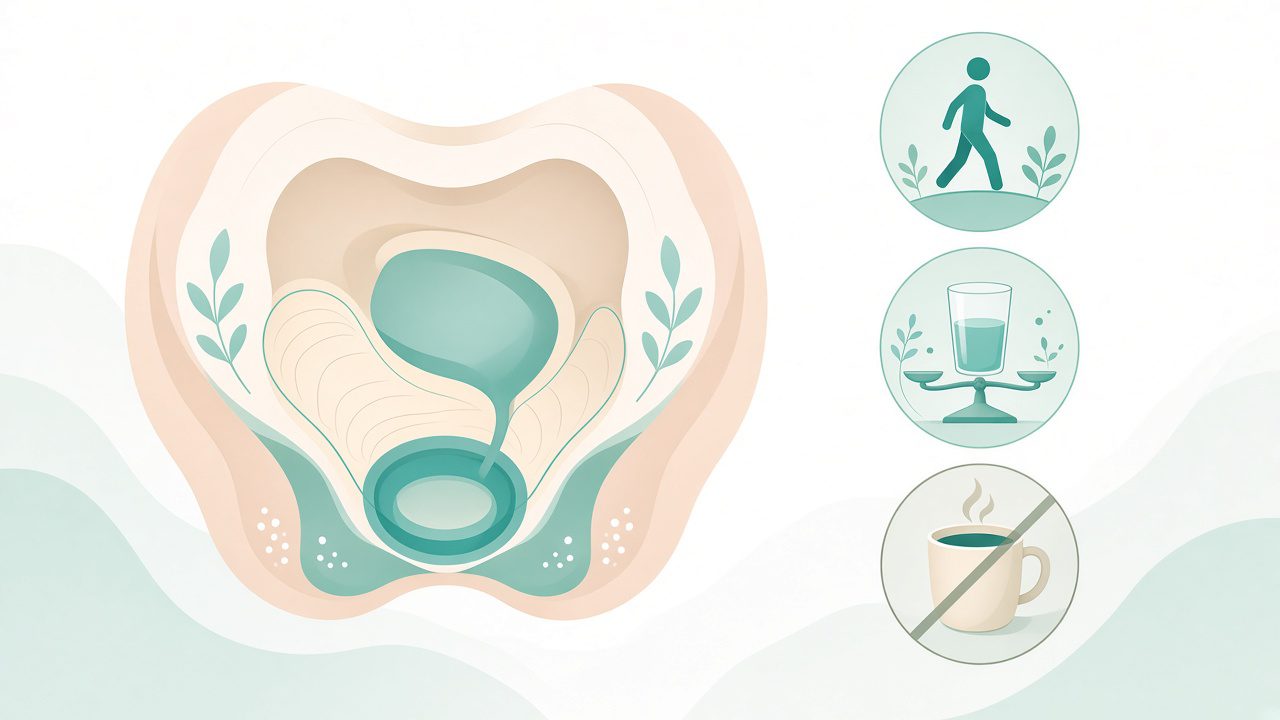
The principle is: type first, rule out infection and residual urine, then lifestyle and training; medicines or procedures are decided by your doctor for the type and severity.
You can start with these directions (fit them to your heart and kidney limits and current medicines; do not extreme-restrict fluids):
- Lifestyle: keep a suitable weight, ease constipation, avoid very tight waist cinching; reduce caffeine, alcohol and large drinks just before bed (not zero water).
- Drinking and voiding rhythm: avoid almost no fluid all day then sudden large intakes; ask whether timed voiding or urge-delay training suits you (more often discussed for urgency).
- Pelvic-floor muscle training (Kegel): correct squeeze of the perineal / anal muscles helps some stress and mixed cases; wrong form (bearing down with the abdomen) has little effect — ask rehab or a specialist if needed.
- Pads and skin care: fine as a temporary aid, not as the only long-term plan.
- Medicines or further care: urgency may involve bladder-regulating options; stress may involve ongoing training, local options or surgery; overflow needs the blockage or emptying problem addressed first. Exact choices depend on your assessment; this article does not list drug names or promise results.
This site also has separate pages on device-based options for incontinence or overactive bladder. If you are already considering non-invasive pelvic-floor training aids, follow that dedicated page and your doctor; this FAQ does not repeat device parameters or case marketing.
When should you seek care quickly?
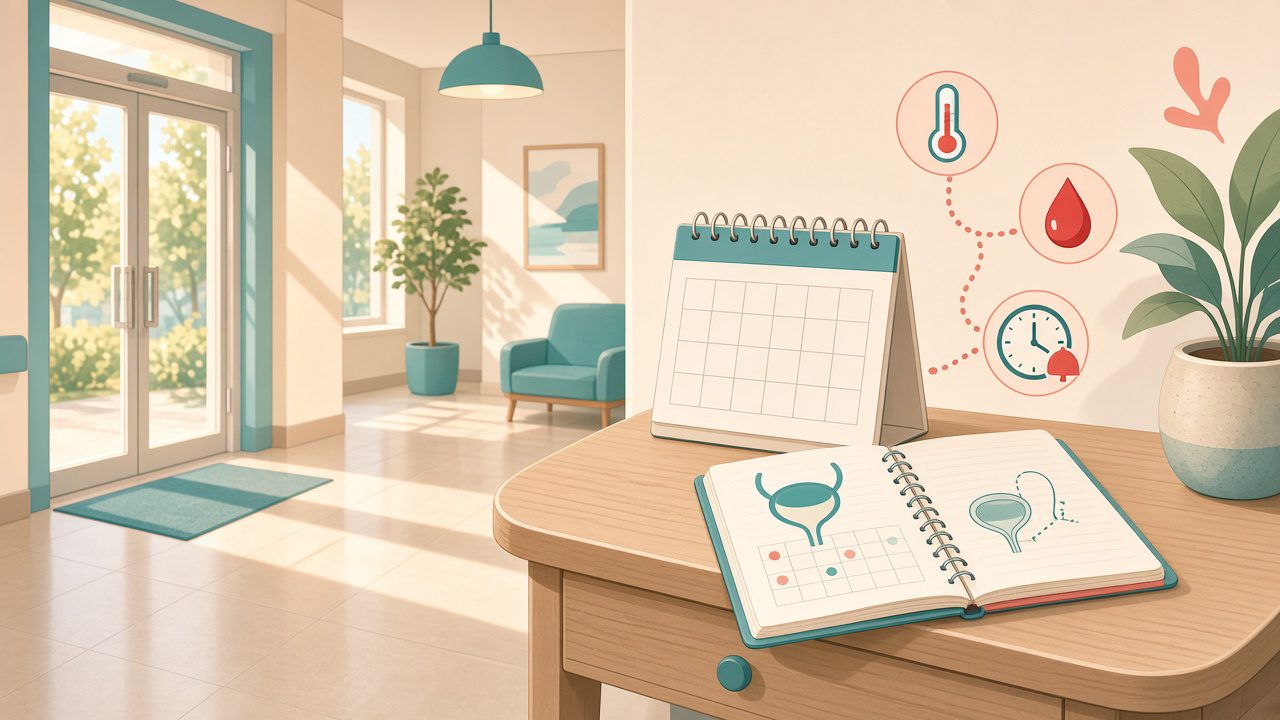
Please seek clinic or emergency care promptly if you have:
- Sudden near-inability to void, lower abdominal pain and fullness, or leakage with a clear residual feeling (watch for retention / overflow).
- A sudden increase in blood in the urine, clots, or fever, back pain and chills.
- New leg weakness, sensory changes, or saddle numbness and other neurological red flags.
- Leakage after childbirth or surgery that clearly harms daily life, or pads that cannot keep up.
- Ongoing leakage after prostate surgery in men, or a weak stream that keeps getting worse.
- Leakage in pregnancy with infection symptoms, or discomfort after extreme self-restriction of fluids.
- Symptoms that worsen quickly, or clear impact on sleep, work, social life and mood.
Early typing and care often reduces leakage and anxiety; waiting too long or only drinking less water can make constipation, infection or over-stretching of the bladder harder to manage.
Yes. Any involuntary leak is a form of incontinence. A small amount does not mean it is safe to ignore, especially if it already limits sport or social life.
They are usually different Chinese labels for the same idea: leakage when abdominal pressure rises. Urgency, mixed and overflow types have different mechanisms — do not force one home remedy onto all of them.
They are closely related but not identical. Overactive bladder centres on urgency and may include frequency and nocturia; some people leak and some do not. Infection, stones or nerve factors still need checking.
Extreme fluid restriction can concentrate urine, irritate the bladder and worsen constipation — it may not help and can make things worse. Adjusting timing and cutting bladder irritants, then treating by type, is more realistic.
Yes. Stress leakage after prostate surgery and overflow from enlargement or nerve problems are both seen. Male leakage especially needs emptying problems ruled out — do not dismiss it as ageing.
No. Many people rely mainly on lifestyle change, pelvic-floor training, bladder training or medicines. Surgery is usually for people who still need more after proper assessment and conservative care, or who have specific structural issues. Whether to operate is a shared decision with your doctor.
Frequency is about how often you go; retention is incomplete emptying or inability to void; incontinence is leakage from loss of control. They can overlap. With leakage or voiding changes, see a urologist; women may also share care with gynaecology or female urology when appropriate.
Medical references
- International Continence Society (ICS): Terminology for adult lower urinary tract and incontinence
- American Urological Association / SUFU: Female Stress Urinary Incontinence guideline
- European Association of Urology (EAU): Non-neurogenic Female LUTS Guidelines
- NIDDK (National Institutes of Health): Bladder Control Problems (Urinary Incontinence)
- Taiwan Health Promotion Administration guidance on lifestyle and pelvic-floor training for women with incontinence; Taiwan Urological Association (TUA) framework for assessing incontinence types
Advice from a urologist
- Leakage is not shameful and not something to just put up with; saying when it happens matters more than only saying you have incontinence.
- Rule out infection and residual urine before choosing training, medicines or surgery; do not buy over-the-counter remedies for a long time or extreme-restrict fluids on your own.
- Stress and urgency often coexist (mixed type); which bothers you most guides what to address first.
- Kegel training only helps when done correctly; if it fails or you cannot do it, return for specialist review instead of adding random intensity.
- Treat inability to void, blood in the urine, fever with back pain, and neurological symptoms as red flags and seek care promptly.
Urinary incontinence is common, but ageing is not a reason to suffer in silence. Typing the pattern, excluding infection and residual urine, then training or further care usually helps more than endlessly changing pads. If leakage bothers you, an assessment by a urologist is recommended.