
Hematuria means red blood cells in the urine. The blood may come from the kidneys, ureters, bladder, prostate or urethra, so even a single episode is worth checking with a urologist.
Some people notice pink, red or tea-coloured urine or clots; others only learn about it when a health check shows “blood” or red cells on a urine test.
Causes range from infection and stones to tumours. Rather than guessing, the safer approach is to arrange suitable tests based on your symptoms, age and risk factors.
Key points: Red urine is not always blood; foods, medicines or menstruation can change its colour, so a urine test is needed to confirm hematuria. Common causes include urinary tract infection, stones, an enlarged prostate and strenuous exercise, but painless hematuria can also be a sign of a bladder or kidney tumour, so it should be followed up even if it stops. Evaluation usually starts with urine tests and ultrasound, with imaging or cystoscopy added according to age and risk.
What is hematuria? Visible vs microscopic blood in urine
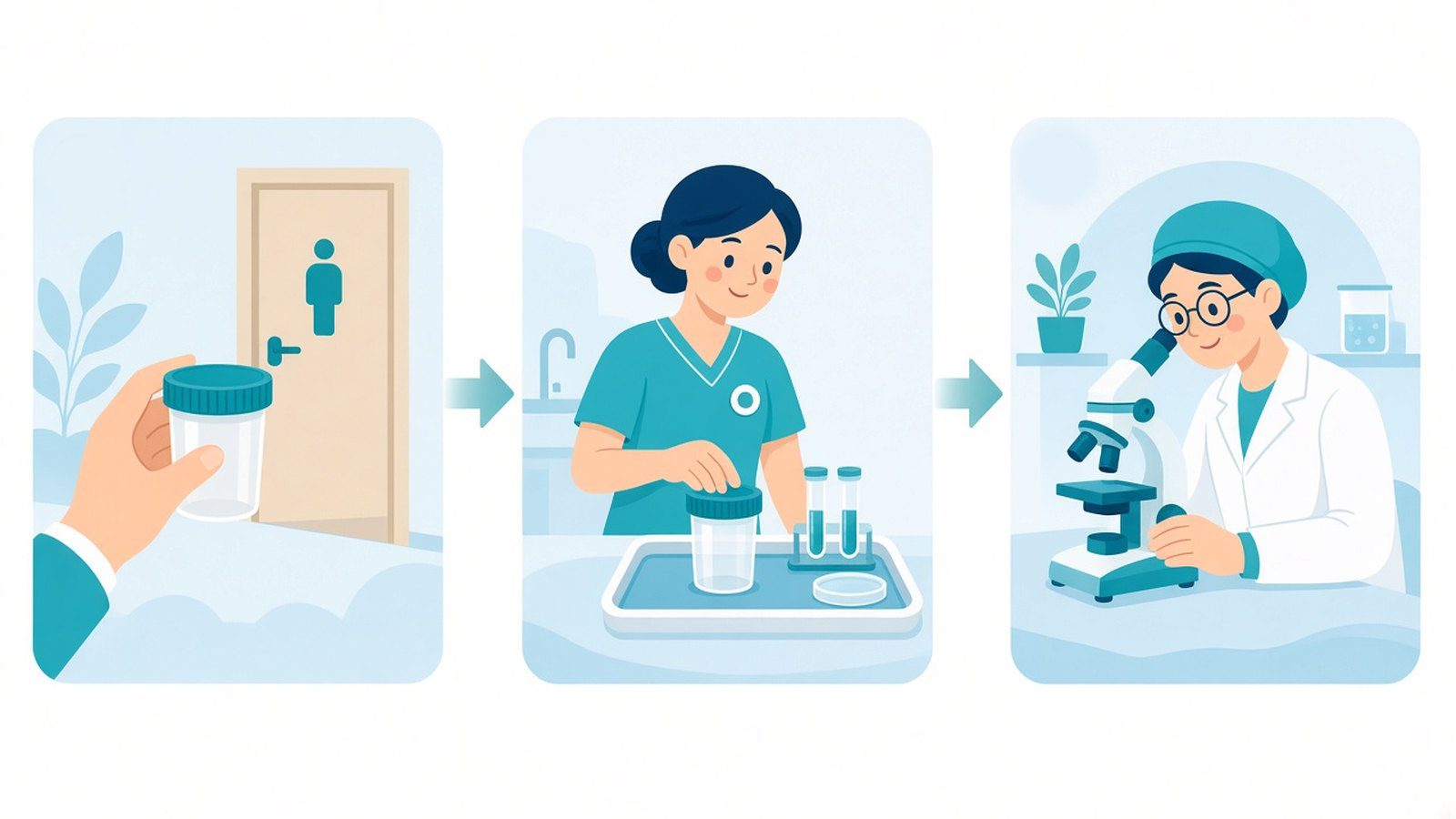
Hematuria is usually described in two ways: visible (gross) hematuria that you can see, and microscopic hematuria, where the urine looks normal but red cells are seen under a microscope.
Visible hematuria may look pale pink, bright red, cola-coloured or contain clots. A small amount of blood can change the colour a lot, so the shade does not reliably show how much bleeding there is or how serious it is.
Microscopic hematuria is often found during a health check or a visit for another problem. Red cells are counted by microscopic examination of the urine sediment; a positive dipstick for “blood” should be confirmed this way.
Does red urine always mean blood?
Not always. Foods such as dragon fruit or beetroot, some medicines, contamination during menstruation, or muscle breakdown products after intense exercise can make urine look red or give a positive dipstick.
If your urine changes colour, think about recent foods, medicines and your period, but still confirm with a urine test rather than judging by colour alone.
What are the common causes of blood in the urine?
Bleeding can come from the upper urinary tract (kidneys, ureters) or the lower urinary tract (bladder, prostate, urethra). The symptoms that come with it often point in the right direction.
Frequent urination, burning or lower-abdominal discomfort often suggest a urinary tract infection such as cystitis. Fever, chills and flank pain raise concern for a kidney infection (acute pyelonephritis).
Sudden one-sided flank pain that spreads to the lower abdomen or groin, together with hematuria, may be related to a urinary stone.
In middle-aged and older men, a weak stream, getting up at night to urinate or a feeling of incomplete emptying may point to benign prostatic enlargement, which can also bleed.
Other causes include strenuous exercise, injury to the flank, abdomen or perineum, recent urinary tract procedures, and kidney conditions such as glomerular disease. If there is marked foamy urine, swelling or high blood pressure, a kidney specialist may also be involved.
Why does painless hematuria deserve attention?
Visible blood without pain that appears and then disappears can be one sign of a urinary tract tumour, such as bladder cancer, urothelial cancer of the kidney or ureter, or renal cell carcinoma.
This does not mean hematuria equals cancer; many cases are linked to benign causes such as infection or stones. But bleeding from a tumour may come and go, so stopping does not mean the problem has resolved, and completing the evaluation is still advised.
If I take blood thinners, is the medicine the cause?
Anticoagulant or antiplatelet medicines can make bleeding easier or more noticeable, but doctors still usually look for the source, because the medicine may simply reveal a problem that was already there.
Do not stop these medicines on your own. Tell your doctor what you take so that the urologist and the prescribing doctor can assess together.
| Possible cause | Common accompanying features | Possible evaluation |
|---|---|---|
| Urinary tract infection (e.g. cystitis) | Frequency, burning, lower-abdominal discomfort; pyelonephritis may cause fever and flank pain | Urine test and culture; blood tests or imaging if needed |
| Urinary stones | One-sided flank pain or colic spreading to the lower abdomen or groin | Urine test, ultrasound or abdominal X-ray, CT |
| Benign prostatic enlargement | Weak stream, night-time urination, incomplete emptying (men) | Urine test, ultrasound; PSA and residual urine as appropriate |
| Strenuous exercise or injury | Starts after exercise or impact; flank or abdominal pain possible | Repeat urine test after rest; assess organs after injury |
| Glomerular or other kidney disease | Foamy urine, swelling, raised blood pressure, kidney function changes | Urine protein and kidney function; kidney specialist if needed |
| Urinary tract tumour | Often painless visible blood that comes and goes; sometimes only microscopic | Ultrasound, CT urography, urine cytology, cystoscopy |
Who needs a more complete evaluation?
Doctors tailor the extent of testing to your individual risk. In general, a more complete evaluation, rather than simply treating an infection and waiting, is usually advised in the following situations:
Older age, current or past long-term smoking, or long-term workplace exposure to dyes, rubber or certain chemical solvents.
Previous pelvic radiotherapy or certain chemotherapy, long-term use of herbal products of uncertain origin (for example, those that may contain aristolochic acid), or a family history of urinary tract tumours.
Repeated hematuria, visible hematuria, blood clots, or red cells that persist on a repeat test after an infection has been treated.
For younger people with typical infection symptoms whose urine returns to normal after treatment, testing may be simpler. Which tests you actually need is decided at an in-person assessment.
Which tests are used to check hematuria?
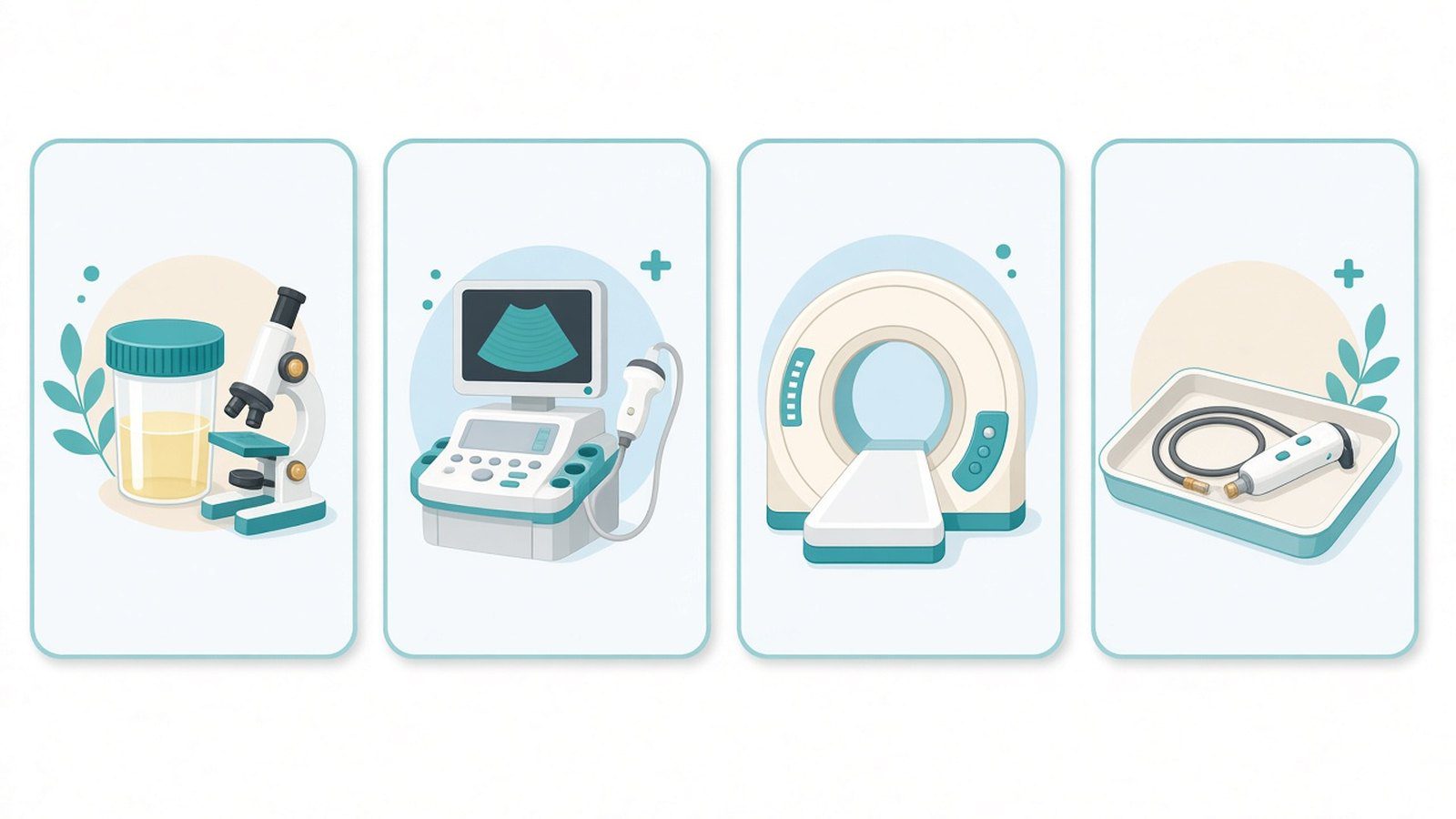
Evaluation usually moves from simple to more detailed tests to confirm that red cells are present, locate the source of bleeding and look for any condition that needs treatment.
Urine and blood tests
Urinalysis with microscopy counts red cells and checks for white cells, bacteria or protein; a urine culture may be added if infection is suspected. Blood tests assess kidney function, and PSA may be discussed for some men depending on age and symptoms.
Imaging
Urinary tract ultrasound gives a first look at the kidneys, bladder and prostate without radiation. If the kidneys and ureters need closer assessment, CT urography may be arranged; people with reduced kidney function or contrast allergy may be offered alternatives.
Cystoscopy and urine cytology
Cystoscopy uses a thin scope passed through the urethra to look directly at the urethra and bladder lining, and has a role in assessing bladder lesions. It is usually done under local anaesthetic. Mild burning or light blood in the urine may follow for a short time; return if you have fever, large clots or cannot pass urine.
Urine cytology looks for abnormal cells in the urine. It is usually a supporting test and must be interpreted together with other results.
| Test | Main purpose | Possible limitations |
|---|---|---|
| Urinalysis with microscopy | Confirm red cells, white cells and protein | A single result may be affected by menstruation, exercise or collection |
| Urine culture | Confirm bacterial infection and suitable antibiotics | Results take time; does not identify other causes |
| Urinary tract ultrasound | Initial look at kidneys, bladder, prostate and stones | Small lesions or ureteric problems may be hard to see |
| CT urography | More complete assessment of kidneys and ureters | Radiation and contrast; kidney function and allergy history need review |
| Cystoscopy | Direct view of the urethra and bladder lining | Invasive; possible brief discomfort, bleeding or infection |
| Urine cytology | Helps detect abnormal cells in urine | A normal result cannot fully exclude a lesion |
How is hematuria treated?

Hematuria is a sign rather than a diagnosis, so treatment depends on the cause that is found, not simply on “stopping the bleeding”.
A urinary tract infection is usually treated with antibiotics chosen by the doctor, with a repeat urine test afterwards if needed. Stones may be observed or treated with medicine, shockwave lithotripsy or endoscopic surgery depending on size and location.
Bleeding from an enlarged prostate may be managed with medicine or surgery depending on symptom severity. If a tumour is found, treatment options are explained according to its site and stage; for prostate assessment, see also Prostate cancer: symptoms, PSA and treatment choices.
If no clear cause is found, your doctor may suggest regular urine checks. If visible blood appears again during follow-up, return earlier.
Each option has its own suitable patients, limits and risks, and individual situations differ, so decide together with your doctor.
When should you seek care promptly?
Most hematuria can be evaluated at a clinic appointment, but seek prompt care or go to an emergency department if you have:
Large blood clots, or clots blocking the flow so that you cannot pass urine and your lower abdomen feels distended.
Heavy bleeding with dizziness, palpitations or pallor that may indicate blood loss.
Fever, chills and flank pain, or severe flank pain that does not ease.
Blood in the urine after a blow to the flank, abdomen, pelvis or perineum.
Before your visit, note when the blood appeared, its colour, any clots or pain, recent exercise and foods, and the medicines you take; this helps the doctor assess you more quickly.
Yes, an assessment is still advised. Bleeding from some urinary tract tumours comes and goes, so stopping does not mean the cause has gone. The doctor will decide which tests are needed based on age, smoking history and other symptoms.
Not necessarily. Dipstick results can be affected by menstruation, exercise, dehydration or how the sample was collected, so microscopy is usually needed to confirm red cells. If microscopic hematuria persists on repeat testing, a urologist can assess whether further tests are needed.
Brief hematuria can occur after intense or prolonged exercise and usually improves with rest. Rest, drink fluids and repeat the urine test; seek prompt care if it recurs, comes with flank pain, the urine is dark brown or you have marked muscle pain.
If you have visible blood, urinary symptoms, flank pain or higher tumour risk, a urologist is usually the first step. If there is also significant protein in the urine, swelling, raised blood pressure or changes in kidney function, a kidney specialist may be involved as well.
Not necessarily. The need for cystoscopy depends on age, smoking and workplace exposure, the type of hematuria and other test results. Lower-risk people may be followed with urine and imaging tests first; discuss the plan with your doctor.
Menstrual blood can contaminate the sample and affect the result. If it is not urgent, it is usually better to repeat the test a few days after your period ends; if testing during your period is necessary, tell the staff beforehand.
Medical references
- American Urological Association: Microhematuria: AUA/SUFU Guideline (2020, amended 2025)
- National Institute of Diabetes and Digestive and Kidney Diseases (NIDDK): Hematuria (Blood in the Urine)
- NHS: Blood in urine
Advice from a urologist
- If your urine turns red, don’t panic but don’t ignore it: think about foods, medicines and your period, then confirm with a urine test.
- Painless hematuria that comes and goes should still be evaluated; don’t stop follow-up just because it has disappeared.
- If you take anticoagulant or antiplatelet medicines, do not stop them on your own; tell your doctor so the cause of bleeding can be assessed together.
- Seek prompt care for large clots, inability to pass urine, fever with flank pain, or blood in the urine after an injury.
Hematuria may be due to an infection or a stone, but it can also be a problem that needs early attention. The key is to arrange suitable tests for your symptoms and risk, find the source of bleeding and then decide on treatment or follow-up. If you notice blood in your urine, have a urologist assess you in person.