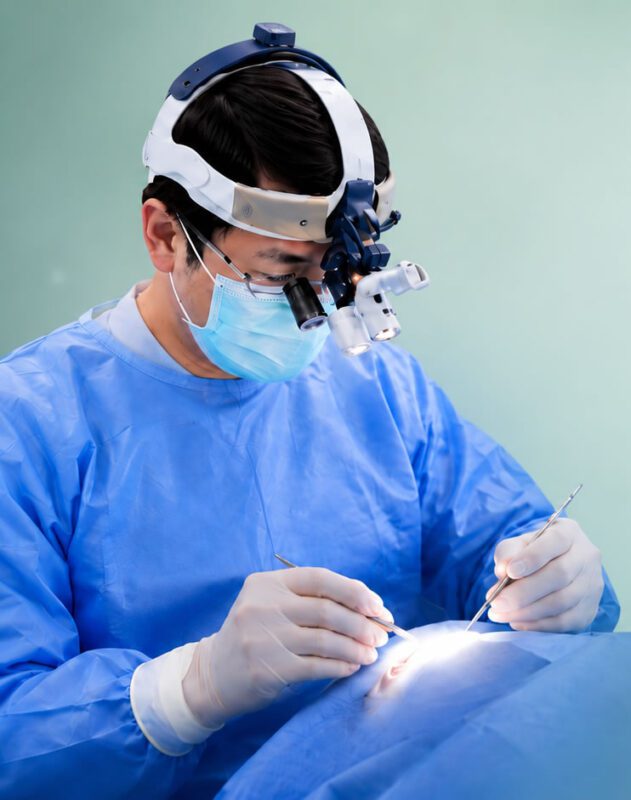
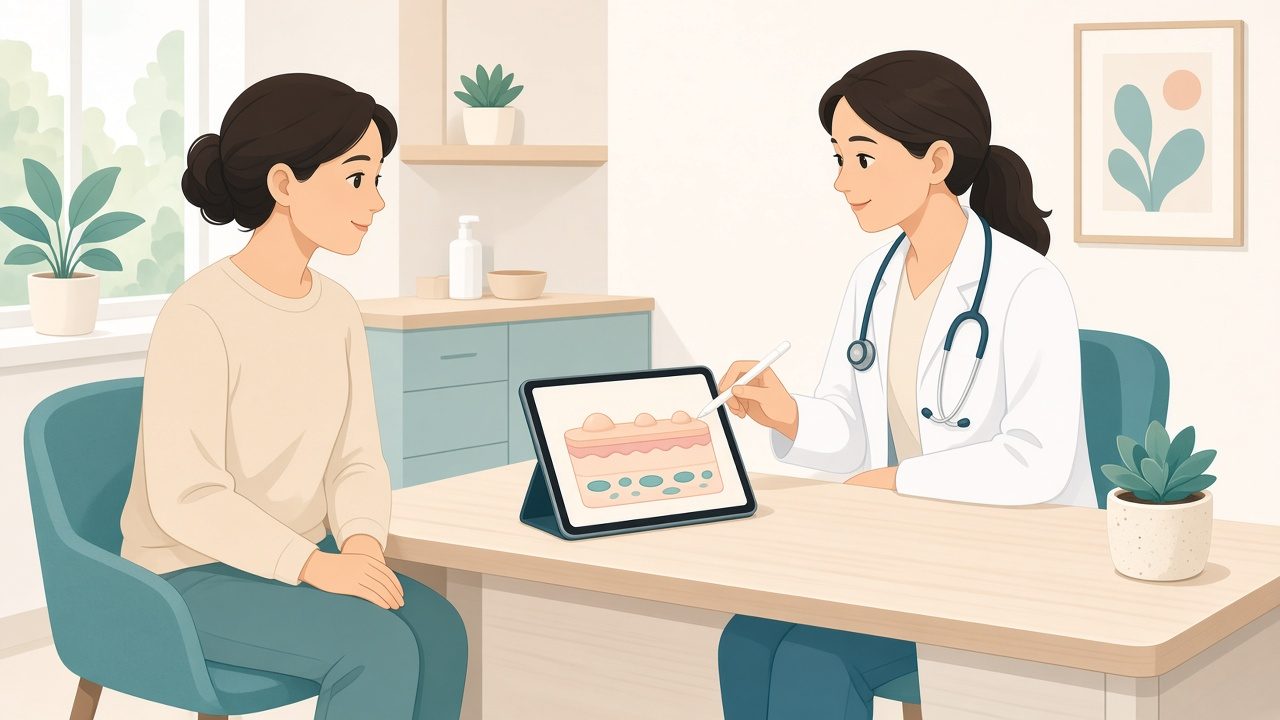
Genital warts are called condyloma acuminata. They are often caused by low-risk human papillomavirus (HPV) and may grow around the genitals or anus.
They spread mainly through sexual contact and skin-to-mucosa contact. Do not burn or corrode a bump at home. A urologist should see it before any treatment.
Key points: Genital warts are often linked to HPV types 6 and 11. The gap after contact can be weeks to months. Soft, cauliflower-like or flat bumps can look similar to other skin findings. Options include topical medicine, freezing, cautery, laser or removal, and warts can return. Condoms lower some risk. Vaccination can be discussed.
What are genital warts, and how are they related to HPV?
Condyloma acuminata are benign wart-like growths on skin or mucosa, commonly called genital warts. Low-risk HPV, especially types 6 and 11, is the usual cause.
High-risk HPV types are more often discussed in relation to cervical, anal, penile or oropharyngeal cancers. A visible wart is not the same as a cancer diagnosis.
Vaccine types, age and dose schedules are explained on the HPV vaccine
How do genital warts spread?
The virus usually enters through tiny breaks in skin or mucosa. Vaginal, anal or oral sex, and hand contact with a lesion followed by contact with other mucosa, can pass it on. Risk is usually lower with one partner and higher when there are more partners.
The time before a lesion appears varies. Some people notice a change within weeks, others after months. No visible wart does not prove the virus is absent, and a new wart cannot always be traced to one encounter.
In pregnancy, a large lesion on the vulva or birth canal should be reviewed with obstetrics. Cesarean birth is not required for every person with warts.
What can genital warts look like?
They are often flesh-colored, pink or gray-brown, soft, and cauliflower-like, comb-like or flat. In men they may be on the foreskin, glans, coronal sulcus, urethral opening or around the anus. In women they may be on the vulva, vaginal opening or around the anus. The mouth is less common but possible.
Itch, bleeding after friction or more discharge can occur, or there may be almost no feeling. Pearly papules, ectopic sebaceous glands, molluscum or skin tags can look similar and need an examination.
A hard, ulcerated, unevenly colored or rapidly enlarging spot should not be assumed to be a wart. Seek care promptly.
How are genital warts treated?
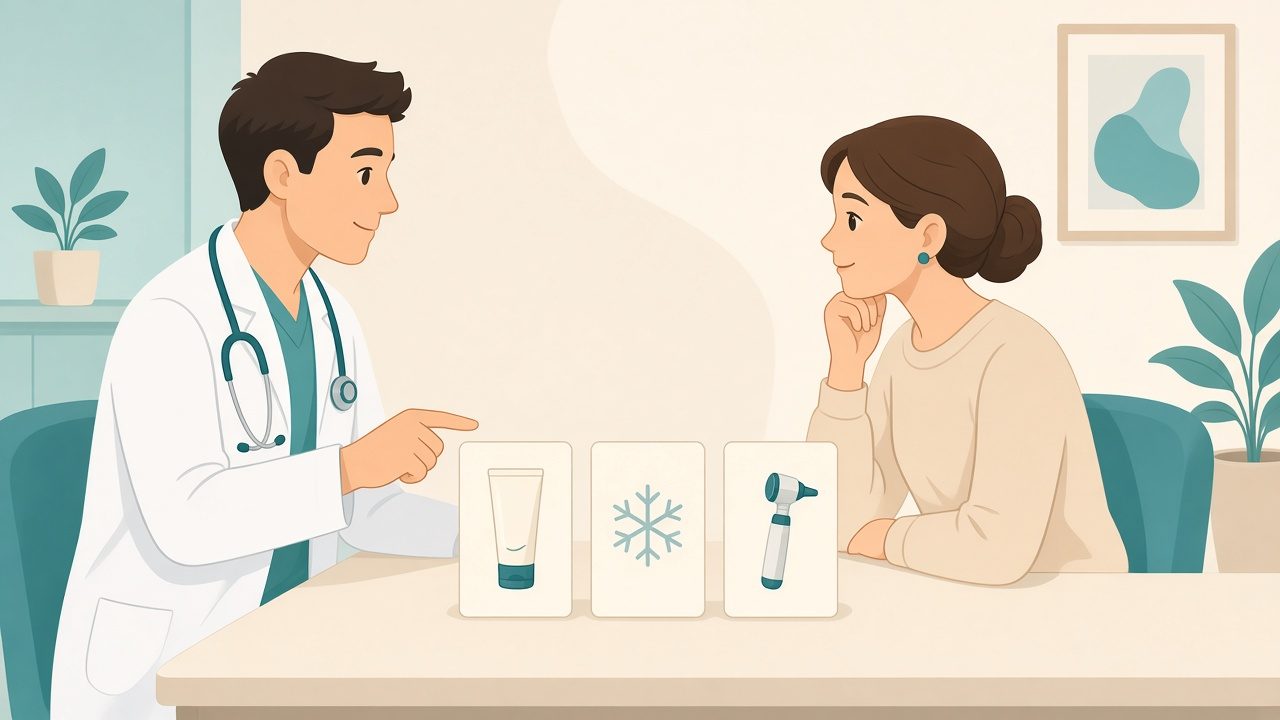
Clinicians usually start with inspection. A vinegar wash or a small biopsy is sometimes added. No single method fits every size, site and number of lesions.
Smaller areas may be treated with topical medicine or clinic freezing. Larger, numerous, urethral or intra-anal lesions, or lesions that do not respond, may lead to a discussion of cautery, laser or excision. Pain, wound care, infection, scarring or narrowing are possible, especially near the urethra or anus.
Treatment removes visible warts. It should not be expected to clear every virus particle at once. Some studies have observed return of lesions, and the chance differs widely.
Warts do not replace checks for other infections. Discharge, ulcers or condomless contact can be discussed together with HIV prevention medicine
| Approach | Often discussed when | Limits to understand |
|---|---|---|
| Topical medicine | Fewer lesions in a suitable site | Irritation or breaks in skin; many products are unsuitable in pregnancy |
| Freezing | Small areas treatable in clinic | Pain, blisters or color change; repeat visits are common |
| Cautery, laser or excision | Larger, awkward sites, or poor response to medicine | Anesthesia, bleeding, infection and scarring are possible |
| Observation | A few very small lesions a clinician chooses to watch | Lesions may increase or pass to a partner |
Can they grow back?
Yes, that can happen. Immune status, untreated tiny lesions and later skin contact all matter. Smoking, weakened immunity or many lesions usually raise the chance of return.
A new bump should be reviewed. Do not reuse leftover medicine or use corrosive products, herbal pastes or cosmetic lasers on genital skin.
Partners with similar bumps should also be seen. A partner without symptoms does not automatically need an invasive exam.
How can the chance of passing it on be lowered?
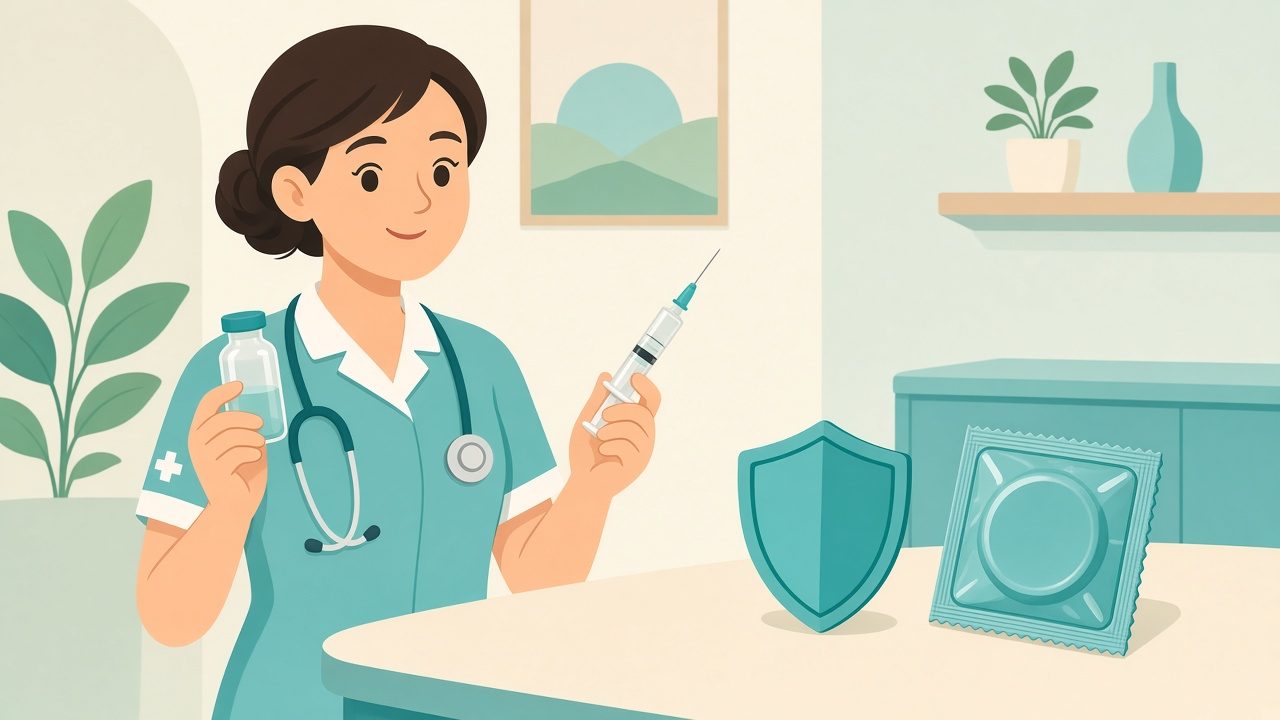
Condoms throughout sex reduce some fluid and mucosa contact. Skin outside the condom can still carry virus, so a condom is not a complete barrier.
HPV vaccine has a preventive role for types not already acquired. It may suit people of any sex, including some who already have warts. Discuss timing with a clinician.
While a lesion is present or a wound is fresh, avoid sex that rubs that area and follow wound-care advice. Separate towels and underwear are enough. The home does not need extreme disinfection.
They are usually passed by sexual or skin-to-mucosa contact, so they are discussed with sexually transmitted infections. Other close contact is sometimes possible. An online description cannot sort this out.
Not always. The gap can be months, and small lesions are easy to miss. After a risk contact or a partner’s diagnosis, an in-person visit is more useful than self-checking alone.
No. They lower some contact risk, but virus can sit on uncovered skin. They are still worth using, and HPV vaccination can be discussed.
Not necessarily. Treatment clears visible warts. Virus may remain in nearby tissue. New bumps should be checked rather than self-treated.
Rapid increase, pain or bleeding, trouble passing urine, fever, or warts found in pregnancy should be assessed promptly. Do not use corrosive products.
Suggestions from the urologist
- A bump on the genitals or around the anus may be a wart or another skin finding. A photo is not enough to decide.
- Topical medicine, freezing, cautery, laser and excision each have limits and a chance of return.
- Condoms lower some risk but do not cover every skin contact. HPV vaccination can be discussed for any sex.
- Fast growth, pain, bleeding, fever, or concern about other infections should be assessed in clinic. Do not use corrosive chemicals.
Visible warts can be treated, but the virus may not disappear at once and lesions can return. A urologist should examine the area before tests or follow-up are planned.