

Anxiety regarding penile dimensions is a common concern often driven by cultural stereotypes or subjective expectations. Before pursuing surgical intervention, understanding scientific medical realities is essential. Penile augmentation involves sophisticated vascular and neural anatomy, meaning realistic expectations and risk assessment are vital to achieving satisfactory outcomes.
Contemporary clinical modalities for penile aesthetic enhancement encompass:
- Penile Girth Enhancement: Acellular Dermal Matrix (ADM) grafting, autologous fat transfer, or injectable fillers.
- Penile Lengthening: Suspensory ligament release and suprapubic lipectomy.
- Glans Enlargement: Submucosal injection with cross-linked hyaluronic acid or micronized ADM.
Surgical Techniques and Modalities
| Category | Clinical Objective | Surgical Principles | Considerations |
|---|---|---|---|
| Girth Enhancement | Increases penile shaft circumference | Placement of acellular dermal matrix (ADM, e.g., MegaDerm) or autologous fat graft between Buck’s fascia and the dartos layer. | Enhances flaccid and erect girth by approx. 1.5–3.0 cm. |
| Penile Lengthening | Enhances exposed flaccid length | Partial division of the suspensory ligament releasing the internal penile segment; optional suprapubic lipectomy. | Primarily improves flaccid hanging length (1.5–3.0 cm); minimal effect on fully erect length. |
| Glans Enlargement | Enhances coronal volume and reduces sensitivity | Targeted submucosal injection of HA or micronized dermal matrix into the glans penis. | Creates balanced aesthetic proportions and provides physical barrier reducing hypersensitivity in premature ejaculation. |
| Material | Properties | Advantages | Potential Drawbacks |
|---|---|---|---|
| Acellular Dermal Matrix (ADM) | Human donor dermal graft with cell components removed; highly biocompatible collagen scaffold. | Natural tactile feel, low reabsorption (10–20%), integrates stably with host vascular bed. | Higher material cost; requires formal surgical dissection and meticulous aseptic technique. |
| Micronized ADM Powder | Micro-pulverized ADM powder reconstituted for minimally invasive syringe delivery. | Needle injection only, minimal downtime, semi-permanent matrix integration. | Initial carrier fluid absorption (20–30%), nodule risk if unevenly injected; cannot be dissolved enzymatically. |
| Hyaluronic Acid (HA) | Medical-grade cross-linked macromolecular gel filler. | Outpatient injection (15–30 min), low tissue trauma, reversible with hyaluronidase. | Temporary duration (6–12 months); requires periodic maintenance touch-ups. |
| Autologous Fat | Liposuctioned and centrifuged fat harvested from lower abdomen or thighs. | 100% biocompatible autologous tissue; simultaneous body contouring. | Variable survival rate (30–50% reabsorption); risk of nodules, calcification, or contour asymmetry. |
| Silicone Implants (e.g. Penuma) | Subcutaneous crescent-shaped medical-grade silicone sleeve. | Definite, permanent girth increase that does not reabsorb over time. | Alloplastic foreign body with risks of infection, seroma, migration, or erosion requiring surgical explantation. |
Anesthesia Protocol
Traditional procedures frequently employ general or spinal anesthesia. Our clinic utilizes advanced Dual Local Anesthesia, targeting the dorsal penile nerves, crural nerves, and peri-penile basal tissues with a micro-dosed epinephrine-lidocaine solution (Figure 1). Patients remain completely awake and comfortable with negligible pain, avoiding cardiopulmonary risks.
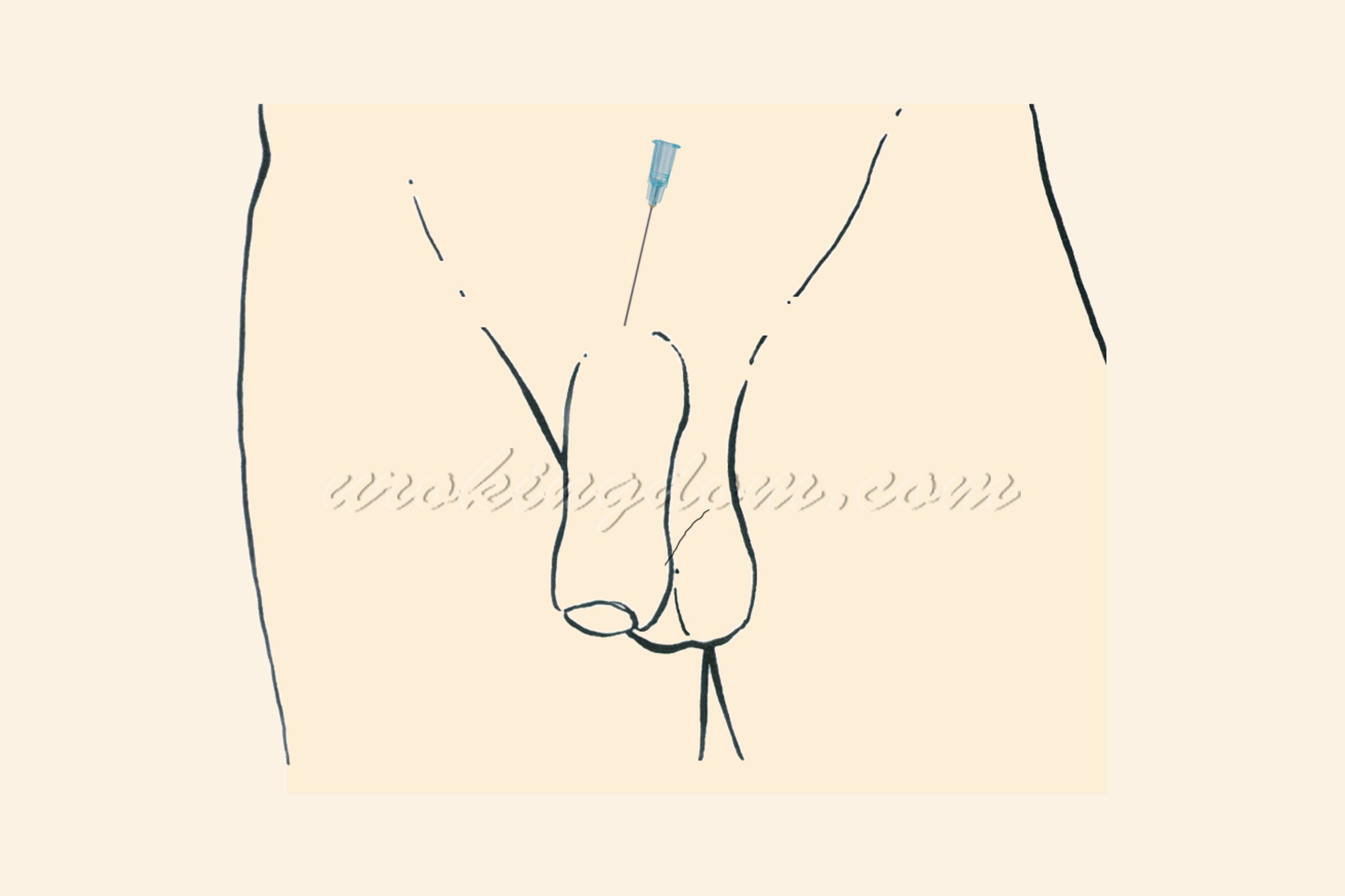
Figure 1: Dual local anesthesia technique specifically targeted at the penile base, providing prolonged pain control without general anesthesia risks.
Clinic Surgical Features
- Dual Local Anesthesia: Avoids general anesthesia and airway instrumentation, allowing rapid recovery.
- Same-Day Outpatient Discharge: Patients can walk and return home on the same day without hospitalization.
- No Electrocautery Heat Damage: Hemostasis is achieved through fine micro-sutures, protecting dorsal nerves and cavernosal blood supply.
- Meticulous Microsurgical Principles: Thorough knowledge of fascial layers ensures smooth graft placement and low complication rates.
Expected Outcomes & Realistic Expectations
- Girth Augmentation: Typical circumference gains range from 1.5 to 3.0 cm depending on tissue laxity and baseline anatomy.
- Length Enhancement: Ligament release primarily improves flaccid exposed length; erect length improvements are typically modest.
- Erectile Quality: Augmentation modifies visual geometry and circumference but does not alter erectile rigidity or testicular hormonal function.
References
- Al-Beltagi, M., et al. (2024). Microphallus early management in infancy saves adulthood sensual life. World Journal of Clinical Pediatrics, 13(2).
- Alter, G. J. (1998). Penile enlargement surgery. Techniques in Urology, 4(2), 70–76.
- Furr, J., et al. (2018). Complications of genital enlargement surgery. The Journal of Sexual Medicine, 15(12), 1811–1817.
- Kwack, J. V., & Kim, J. J. (2018). Penile augmentation using hyaluronic acid filler. Sexual Medicine Reviews, 6(4), 629–635.
- Littara, A., et al. (2019). Cosmetic penile enhancement surgery: a 3-year single-centre retrospective clinical evaluation of 355 cases. Scientific Reports, 9(1), 6323.
- Panfilov, D. E. (2006). Augmentative phalloplasty. Aesthetic Plastic Surgery, 30(2), 183–197.
- Vardi, Y., et al. (2008). A critical analysis of penile enhancement procedures for patients with normal penile size. European Urology, 54(5), 1042–1050.
- Wessells, H., et al. (1996). Penile length in the flaccid and erect states: Guidelines for penile augmentation. The Journal of Urology, 156(3), 995–997.