

Overactive Bladder Syndrome (OAB) is a symptom complex defined by the International Continence Society (ICS) as urinary urgency, usually accompanied by frequency and nocturia, with or without urgency urinary incontinence, in the absence of urinary tract infection or other obvious pathology. Patients frequently experience a sudden, compelling desire to pass urine that is difficult to defer. This severely disrupts work, rest, and sleep, causing emotional distress and social withdrawal.
High-Intensity Focused Electromagnetic Technology (HIFEM)
High-Intensity Focused Electromagnetic technology (HIFEM) utilizes Faraday’s law of electromagnetic induction to generate rapidly oscillating magnetic fields. These fields penetrate deep tissues to stimulate the central and peripheral nervous systems, inducing neural depolarization. Crucially, HIFEM modulates spinal nerve responses across the S2 to S4 sacral segments while targeting the pudendal nerve pathways. Through repeated activation of terminal motor nerve fibers, HIFEM strengthens pelvic floor musculature and striated urethral sphincter endurance. Concurrently, it triggers a protective inhibitory reflex that calms involuntary detrusor overactivity, thereby alleviating urgency, frequency, and urge incontinence.
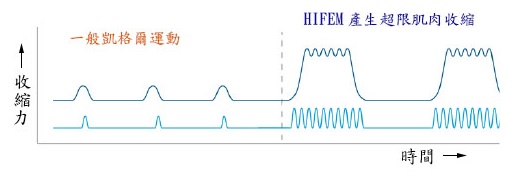
Unlike electrical stimulation, HIFEM magnetic pulses pass freely through skin and subcutaneous fat without directly stimulating cutaneous pain nociceptors or C-fibers. This prevents skin burns or stinging sensations, offering far greater patient comfort and compliance during the therapeutic course.
Magnetic Stimulation Chair: UI CUBE
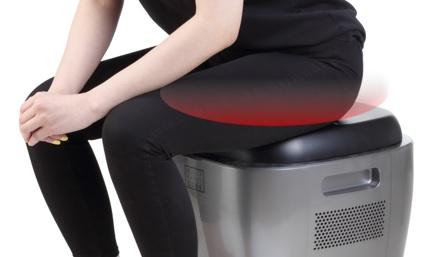
The UI CUBE magnetic chair delivers focused electromagnetic intensity reaching 2.5 Tesla through specialized circular coils. Compared with self-directed Kegel exercises, the magnetic chair provides uniform, high-frequency supramaximal pelvic floor muscle conditioning. A single 20-minute session achieves neuromuscular stimulation equivalent to approximately 12,000 Kegel contractions. By inducing urethral sphincter hypertrophy and reinforcing central inhibitory reflexes against detrusor hyperreflexia, it effectively alleviates urinary urgency and restores bladder stability.
Key Advantages of HIFEM Magnetic Therapy for OAB
- Completely Non-Invasive: No internal probes or skin electrodes required.
- Full Privacy & Convenience: Performed fully clothed while seated comfortably in a relaxing clinical environment.
- Neuromodulation & Muscle Conditioning: Simultaneously calms detrusor irritability and rebuilds pelvic sphincter endurance.
- Evidence-Based: Multiple international studies confirm sustained symptom relief and improved quality of life.
References
- Frigerio M, Barba M, Cola A, et al. Flat Magnetic Stimulation for Stress Urinary Incontinence: A Prospective Comparison Study. Bioengineering. 2023;10:295.
- Braga A, Castronovo F, Caccia G, et al. Efficacy of 3 Tesla Functional Magnetic Stimulation for the Treatment of Female Urinary Incontinence. J Clin Med. 2022;11(10):2805.
- Fergany LA, Shaker H, Arafa M, Elbadry MS. Does sacral pulsed electromagnetic field therapy have a better effect than transcutaneous electrical nerve stimulation in patients with neurogenic overactive bladder? Arab J Urol. 2017;15(2):148-152.
- Lo TS, Tseng LH, Lin YH, et al. Effect of extracorporeal magnetic energy stimulation on bothersome lower urinary tract symptoms and quality of life in female patients with stress urinary incontinence and overactive bladder. J Obstet Gynaecol Res. 2013;39:1526–1532.
- Abrams P, Cardozo L, Fall M, et al. The standardization of terminology of lower urinary tract function: Report from the ICS. Neurourol Urodyn. 2002;21:167–178.