
Health check-up reports and clinic notes often say cystitis or acute cystitis. When urination burns, you need to go often and the urge comes suddenly, many people assume it is just stress or that drinking more water will fix it.
Cystitis is one of the most common types of urinary tract infection. With proper testing and treatment the outlook is usually good, but if symptoms keep coming back, come with fever or back pain, or you already have stones, an enlarged prostate or diabetes, it should not be treated like a minor cold.
This article explains in plain language what cystitis is, why it happens, how it differs from urethritis, which tests are used, when to seek care quickly and how to reduce recurrences. If painful urination is your main concern, you can also start with the overview Painful urination: what to do.
Key points: Cystitis is inflammation of the bladder lining. Typical symptoms are frequent urination, urgency and a burning feeling when passing urine, sometimes with lower abdominal discomfort or blood in the urine. Most cases are caused by common gut bacteria (especially E. coli) travelling up the urethra into the bladder, and it is more common in women because of anatomy. Asymptomatic bacteriuria means bacteria in the urine without symptoms; most healthy adults do not need to treat it as acute cystitis, but pregnant women, young children with reflux, people with severe diabetes and other high-risk groups should follow their doctor’s plan. Seek care promptly if you have fever, back pain, chills, nausea or vomiting, or cannot pass urine.
What is cystitis, and how is it different from asymptomatic bacteriuria?
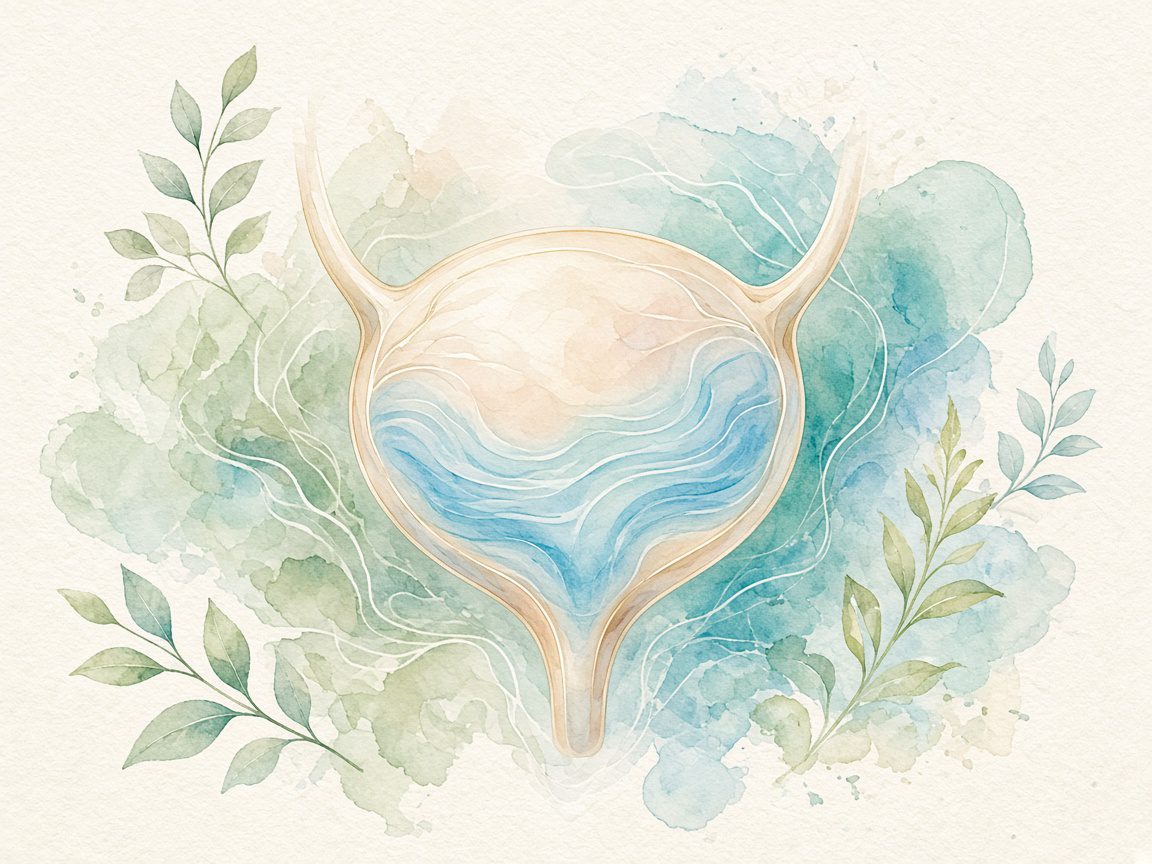
Cystitis means inflammation of the bladder lining. In an acute episode, bacteria multiply in the bladder and irritate the lining, causing frequent urination, urgency and burning.
Doctors also talk about asymptomatic bacteriuria: a urine test or culture finds bacteria, but there is no clear frequency, burning or urgency. For most healthy adults, asymptomatic bacteriuria usually does not need to be treated with antibiotics like acute cystitis; whether to treat depends on age, sex, pregnancy, diabetes and any structural problems of the urinary tract.
Who needs extra attention for asymptomatic bacteriuria?
Groups that need extra attention include pregnant women; young children with structural problems such as vesicoureteral reflux; and people with severe diabetes, weakened immunity, or who are about to have a urological procedure. Whether and how to treat in these situations should follow your doctor’s assessment rather than self-diagnosis.
If bacteria keep showing up over a long time without symptoms, it is worth having a urologist check for stones, residual urine or structural abnormalities, instead of repeating short courses of medicine.
Why does cystitis happen?

The most common route is ascending infection: bacteria enter through the perineum and urethral opening and travel up to the bladder. Less often, bacteria may come down with urine from the upper urinary tract, or be linked to infection of nearby organs or, very rarely, a fistula. In clinic, ascending infection is by far the most common.
It is more common in women because of anatomy: the female urethra is short (roughly four to six centimetres) and its opening is close to the anus, so gut bacteria can more easily take the wrong path. In adulthood women are affected far more often than men; in men, repeated episodes are a stronger reason to check the prostate, stones or voiding problems.
Common causes and triggers include:
- Gut bacteria travelling upward: mostly common gut bacteria such as E. coli; a few cases involve other or mixed bacteria, which a culture can identify.
- Sexual activity (honeymoon cystitis): intercourse can push bacteria from the perineum into the urethra, so episodes are more likely after marriage or sex.
- Hygiene habits: wiping from back to front after using the toilet, or staying damp and hot for long periods, can bring bacteria closer to the urethral opening.
- Holding urine and drinking too little: urine stays in the bladder too long, giving bacteria more chance to multiply.
- After menopause: lower oestrogen weakens the protective lining of the urinary tract, raising the chance of repeated infections.
- Residual urine and voiding problems: an enlarged prostate, neurogenic bladder or pelvic surgery can stop the bladder emptying fully, letting bacteria settle in.
- Stones, foreign bodies, tumours or dead tissue: these give bacteria places to attach and hide.
- Medical procedures: the risk of infection is higher for a short time after catheterisation, urethral dilation, cystoscopy or retrograde examinations.
- Diabetes, weakened immunity, congenital urinary tract abnormalities: these increase the chance of episodes and ascending infection.
You do not need to memorise bacteria names or molecular details. The key points are: get checked when you have symptoms, and look for triggers when it keeps coming back.
What are the symptoms of cystitis?
Typical acute cystitis often causes frequent urination (needing to go again and again within a short time), urgency (a sudden, strong need to go), burning, stinging or pain when passing urine, dull pain or discomfort in the lower abdomen or above the pubic bone, and cloudy or smelly urine; sometimes blood is seen in the urine, either under the microscope or with the naked eye. For changes in urine colour, see Abnormal urine colour; if you see blood, compare with Blood in urine: causes and tests.
In a simple lower urinary tract infection, most people do not have a high fever or obvious back pain. If you develop fever, chills, back or flank pain, nausea or vomiting, the infection may have reached the upper urinary tract (for example pyelonephritis). Do not keep treating it as ordinary cystitis and waiting.
Men who also have perineal pain, discomfort on ejaculation or severe difficulty passing urine may have prostatitis or another condition, which a doctor needs to tell apart.
How is it different from urethritis and other causes of urinary discomfort?
Painful urination is not always cystitis. The table below gives a general direction; the final answer depends on your history and tests.
| Condition | Common pattern | Read more |
|---|---|---|
| Cystitis | Mainly frequency, urgency and burning; more common in women; often linked to gut bacteria travelling upward | This article |
| Urethritis | Discharge and itching are more prominent; sexually transmitted infections need to be considered | Urethritis: causes and treatment |
| Painful urination (overview) | A map of infection, stones, irritants, interstitial cystitis and more | Painful urination: what to do |
| Blood in urine | Infection, stones, tumours and other causes need to be checked | Blood in urine: causes and tests |
| Frequent urination / night-time urination | Not only infection; overactive bladder, the prostate and other causes are possible | Frequent urination and nocturia |
The point is not to self-treat based on what you read online: symptoms plus a urine test (with a culture or imaging when needed) are what tell these conditions apart.
Which tests are used for cystitis?
Your doctor will choose tests based on your symptoms. Common ones include:
- Urinalysis (urine test): checks white blood cells, nitrites, blood and more to judge whether a bacterial infection is likely.
- Urine culture and sensitivity testing: identifies which bacteria are present and which antibiotics they respond to. The bacterial count in the report has to be read together with your symptoms by a doctor; finding bacteria does not automatically mean the same medicine is needed.
- Imaging or further tests when needed: for repeated episodes, suspected stones, obvious blood in the urine, infection in men, poor response to treatment or upper urinary tract symptoms, an ultrasound or other tests may be arranged to look for structural problems or residual urine.
If possible before your visit, provide a midstream urine sample (clean the area, let the first part go, then collect) so the result is more accurate; follow the instructions given at your clinic.
| Test | Main purpose | Notes |
|---|---|---|
| History and physical examination | Understand symptoms, sexual activity and any surgery or catheter history | Mention pregnancy, diabetes or repeated episodes |
| Urinalysis | First check for infection and blood | A common first-line test |
| Urine culture and sensitivity | Confirm the bacteria and guide antibiotic choice | The count must be interpreted with the clinical picture |
| Ultrasound and other imaging | Look for stones, residual urine or structural abnormalities | More often arranged for repeated episodes or red-flag symptoms |
Treatment and everyday relief: what is usually done?

The principle is: the right antibiotic, the full recommended course, and dealing with any triggers that can be found.
Common approaches include:
- Antibiotics: chosen according to the urine test, culture and guidelines. Acute episodes seen in clinic are mostly treated by mouth, usually for a few days (commonly about three to seven days in practice; your doctor decides the exact length). Stopping as soon as symptoms improve after a day or two is one of the most common reasons for recurrence and resistance.
- Drink more water and do not hold urine: this helps flush out bacteria (people with heart or kidney limits should follow their doctor’s advice).
- Symptom relief: rest and warm sitz baths can ease discomfort; whether to use pain relief or antispasmodic medicine is decided by your doctor.
- Avoid irritants: during an episode, cut down on coffee, alcohol and spicy food to avoid irritating the bladder further.
Repeatedly buying over-the-counter remedies without a urine test, or stopping once symptoms disappear, easily leads to a cycle of seeming better and then relapsing. With asymptomatic bacteriuria, do not insist on wiping out bacteria until the culture is negative.
How can recurrences be reduced?
Start with daily habits: wipe from front to back after using the toilet; urinate soon after sex; drink enough and go when you feel the urge instead of holding it; wear breathable clothing and avoid staying damp for long periods. For repeated infections after menopause, you can discuss with your doctor whether options such as local oestrogen are suitable. If you have residual urine, stones, an enlarged prostate or diabetes, managing that condition matters.
Cranberry products are sometimes mentioned for prevention, but the effect varies from person to person. They cannot replace diagnosis and treatment, and should not be seen as a cure on their own.
If you have several episodes within a year, a urologist should look for triggers. For a small number of people, once structural problems have been ruled out, the doctor may discuss longer-term prevention (including whether preventive antibiotics are appropriate). This needs individual assessment and is not for everyone.
When should you seek care quickly?
Please see a doctor or go to the emergency department promptly if you have:
Fever, chills, back or flank pain, nausea or vomiting.
A sudden increase in blood in the urine, blood clots, or difficulty passing urine or being unable to pass it.
Urinary symptoms during pregnancy.
Diabetes, weakened immunity, or a recent urological procedure.
Symptoms clearly getting worse after a day or two, or almost no improvement despite medicine prescribed by a doctor.
In children: crying and refusing to urinate, or unexplained fever with unusual-smelling urine.
With early and appropriate treatment, most acute cystitis has a good outcome and is less likely to progress to pyelonephritis or a more serious body-wide infection. Delaying too long or using the wrong treatment raises the risk.
Mild irritation or very early discomfort may settle in a few cases, but typical bacterial cystitis usually needs proper diagnosis and treatment. Waiting until fever or back pain appears carries more risk than seeing a doctor early.
For most healthy adults, no. Active treatment is mainly needed in high-risk situations such as pregnancy, young children with reflux, severe diabetes or before certain procedures, based on your doctor’s assessment.
Not necessarily. It is usually ordinary gut bacteria travelling up the urethra. If there is discharge, itching or a high-risk exposure, urethritis or a sexually transmitted infection still needs to be ruled out, so do not label it yourself.
Yes, but less often than women. When men do get it, checks for prostate problems, stones or voiding difficulties are more often needed, so it should not be put down to simply not drinking enough.
Cystitis mainly causes frequency, urgency and burning; urethritis often involves discharge and itching and more often requires considering sexually transmitted infections. Both can make urination painful, so history and tests are needed to tell them apart.
Drinking more water helps, but cranberry cannot replace antibiotics or testing. With typical symptoms or red-flag symptoms, you should still see a doctor.
Common reasons are not finishing the course, bacteria not being fully cleared, or untreated triggers such as residual urine, stones, blood sugar or changes in the lining after menopause. Go back to a urologist for reassessment and a culture rather than repeatedly buying medicine yourself.
Medical references
- NHS: Urinary tract infections (UTIs)
- NIDDK (National Institutes of Health): Bladder Infection (UTI) in Adults
- MedlinePlus: Urinary tract infection – adults
- European Association of Urology (EAU): Urological Infections Guidelines
- IDSA: Uncomplicated Cystitis and Pyelonephritis
Advice from a urologist
- For frequency, urgency or burning, get a urine test first rather than relying on over-the-counter remedies for a long time.
- If antibiotics are prescribed, finish them as advised; do not stop early just because symptoms improve quickly.
- With repeated episodes, finding the trigger (residual urine, stones, menopause, blood sugar, hygiene and sexual habits) matters more than changing medicines again and again.
- Do not insist on killing every bacterium in asymptomatic bacteriuria; let your doctor decide on treatment based on your risk.
- Treat fever, back pain or infection symptoms during pregnancy as red flags and seek care promptly.
Cystitis is common, but drinking some water and putting up with it is not a one-size-fits-all fix. Knowing whether you have symptoms, whether there are red flags and whether there are triggers behind repeated episodes saves you unnecessary detours. If you have frequent urination, burning when passing urine or a suspected urinary tract infection, an assessment by a urologist is recommended.