Scrotal swelling means the scrotum, the pouch of skin that holds the testicles, is larger than usual. It can affect one or both sides and may be painful or completely painless; some men instead notice a lump on or next to a testicle while showering.
The scrotum contains the testicles, the epididymis, the spermatic cord and blood vessels, and swelling can come from any of these, or from abdominal contents slipping down through the groin. Whether the swelling came on suddenly or slowly, whether it hurts, and whether it feels like a water-filled bag or a firm lump are all important clues.
If pain is your main concern, see also the article on testicular pain. This article focuses on scrotal swelling and testicular lumps, covering common causes, tests and situations that need prompt medical care.
Key points: Common causes of scrotal swelling include a hydrocele, a varicocele, epididymitis and an inguinal hernia, and most can be treated. However, a firm lump in the testicle itself, or a testicle that becomes larger or harder, needs a tumour to be ruled out. Sudden severe pain and swelling of the scrotum may be testicular torsion, so go to an emergency department straight away (119 in Taiwan); a hernia lump that cannot be pushed back and is painful, or comes with vomiting, also needs immediate care.
How is scrotal swelling different from a testicular lump?
Scrotal swelling means the whole scrotum, or one side of it, becomes larger, often because of fluid, enlarged veins or inflammation; a testicular lump is a localised bump felt on or next to the testicle itself. The two can occur together, and it is hard to tell on your own which structure a lump comes from.
Is painless scrotal swelling nothing to worry about?
Not necessarily. Hydroceles and varicoceles are usually painless and usually not serious, but testicular tumours also often show up as a painless lump or a testicle that becomes larger or harder. Any scrotal swelling or lump without a clear cause should be checked by a doctor.
What are the common causes of scrotal swelling?

A hydrocele is a build-up of fluid around the testicle. It is usually painless, feels like a balloon filled with water, and can affect one or both sides. It is common in newborns and most clear up on their own within a few months after birth; in adults a hydrocele is less likely to go away by itself, and surgery can be considered if it causes discomfort.
A varicocele is enlarged veins inside the scrotum, most often on the left. It feels like a bundle of twisted blood vessels, may cause a dragging or heavy feeling, and may be linked to reduced fertility; see varicocele symptoms and diagnosis. If an older man suddenly develops a varicocele, the doctor may arrange kidney tests to rule out a kidney tumour affecting blood flow back from the testicle.
Epididymitis or orchitis often causes a red, swollen, warm and painful scrotum, possibly with fever, painful urination or discharge from the urethra. In younger men it is more often related to sexually transmitted infections such as gonorrhoea or chlamydia; in older men it is more often related to urinary tract infections.
An inguinal hernia is when part of the bowel or other abdominal tissue slips down through the groin into the scrotum. The lump often gets bigger when standing, coughing or straining and may shrink when lying down; see hernia symptoms and clinical diagnosis.
Testicular tumours commonly show up as a lump in the testicle, an enlarged testicle, or a scrotum that feels heavy or hard, usually on one side only. These symptoms can also have other causes and do not necessarily mean a tumour, but they need to be checked promptly. Other causes include injury, swelling after genital surgery, and general fluid retention from conditions such as heart failure.
Why does sudden painful scrotal swelling need immediate care?
Sudden severe pain with swelling of the scrotum may be testicular torsion: the testicle twists and cuts off its own blood supply, and delay can mean losing the testicle. This is an emergency, so go to an emergency department straight away (119 in Taiwan) instead of waiting to see if it settles.
| Possible cause | Typical features | Possible assessment |
|---|---|---|
| Hydrocele | Painless, water-bag-like swelling, one or both sides | Examination, transillumination, scrotal ultrasound |
| Varicocele | Mostly on the left, like a bundle of twisted vessels, may feel heavy | Examination while standing, scrotal ultrasound, kidney ultrasound if needed |
| Epididymitis / orchitis | Red, swollen, warm and painful, possibly with fever, urinary discomfort or discharge | Urine test, STI screening, ultrasound |
| Inguinal hernia | Bigger when standing or straining, may shrink when lying down | Examination, check while coughing, ultrasound |
| Testicular tumour | Lump in the testicle, enlarged or harder testicle, often painless | Scrotal ultrasound, blood tests for tumour markers |
| Testicular torsion | Sudden severe pain and swelling, possibly with nausea and vomiting | Immediate emergency assessment |
Which tests are used for scrotal swelling?
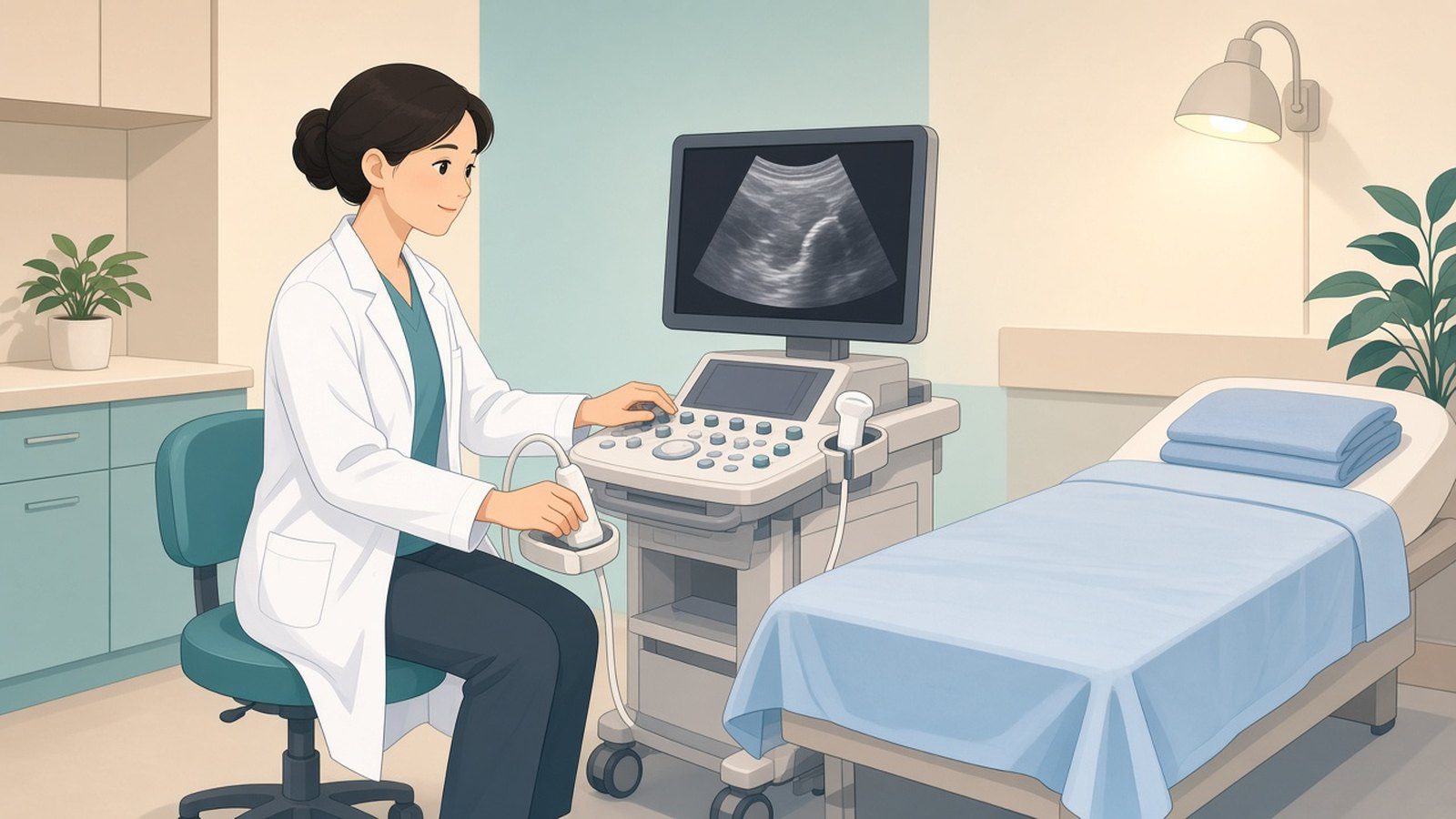
The doctor will ask when the swelling appeared, whether it came on suddenly or grew slowly, whether it hurts, whether there was an injury, fever or urinary symptoms, and whether the lump changes with standing or straining, then examine the scrotum, testicles and groin.
Physical examination and transillumination
The doctor will feel the swollen area to judge whether the lump comes from the testicle itself, the epididymis, the spermatic cord or the groin. A light may be shone through the scrotum; if the swollen area lets light through, a fluid-filled hydrocele is more likely. A varicocele may not be obvious when lying down, so you may be asked to stand for the examination.
Scrotal ultrasound and other tests
Scrotal ultrasound is a commonly used test for scrotal swelling. It can tell apart fluid, enlarged veins, inflammation and solid lumps in the testicle, and can also show blood flow. If infection is suspected, urine tests and screening for sexually transmitted infections are arranged; if a testicular tumour is suspected, blood tests for tumour markers may be done, with further imaging depending on the results.
| Test | Main purpose | Possible limitations |
|---|---|---|
| History and examination | Judge where the lump is and how urgent it is | Marked swelling can make the testicle itself hard to feel |
| Transillumination | First check for fluid build-up | Cannot replace ultrasound confirmation |
| Scrotal ultrasound | Tell apart fluid, enlarged veins, inflammation or solid lumps, and assess blood flow | Needs to be interpreted by a doctor together with symptoms |
| Urine test / STI screening | Check for infection | Tests are chosen based on symptoms and exposure |
| Blood tests (tumour markers) | Support assessment when a testicular tumour is suspected | A normal result does not rule out a tumour; imaging is also needed |
How is scrotal swelling treated, and what helps day to day?
Treatment depends on the cause. A hydrocele that causes no trouble can be monitored; if it grows and causes discomfort, hydrocele surgery (hydrocelectomy) can be considered. If a varicocele causes pain or discomfort or affects fertility, the doctor may discuss surgery with you; an inguinal hernia usually needs assessment of when to repair it surgically.
Epididymitis usually needs antibiotics as assessed by a doctor; if it is related to a sexually transmitted infection, partners may also need testing. A testicular tumour needs further tests and treatment arranged promptly by a urologist.

For daily care, during inflammation or painful swelling you can wear supportive underwear to lift the scrotum and cut down on strenuous activity; with your doctor’s agreement, a cold pack wrapped in a towel can be applied for short periods, without putting ice directly on the skin.
Can I check my own testicles?
Yes. After a shower, when the scrotum is relaxed, gently feel both testicles to get to know their usual size, shape and feel. If you notice a new lump, one side becoming larger or harder, or a heavy feeling in the scrotum, see a doctor rather than watching it on your own for too long.
When should you seek care promptly for scrotal swelling?
Most scrotal swelling can be assessed at a regular clinic visit, but seek care promptly in the following situations:
Sudden severe pain and swelling of the scrotum, or with nausea and vomiting: this may be testicular torsion, so go to an emergency department straight away (119 in Taiwan).
A lump in the groin or scrotum that cannot be pushed back, becomes hard and painful, or comes with abdominal pain and vomiting: seek care straight away.
A red, swollen, warm and painful scrotum with fever, painful urination or discharge from the urethra.
A new lump in a testicle, one side becoming larger or harder, or a heavy feeling in the scrotum.
Marked swelling or bruising of the scrotum after an injury.
Yes. Painless swelling is common with a hydrocele or varicocele, but testicular tumours can also be painless. Scrotal swelling or a lump without a clear cause should be checked by a urologist.
Most hydroceles in newborns clear up on their own within a few months; in adults a hydrocele is less likely to go away by itself. If it causes no trouble it can be monitored, and surgery can be discussed with a doctor if it grows or causes discomfort.
Not necessarily. A lump can also come from an epididymal cyst, inflammation or enlarged veins; but a firm lump in the testicle itself needs a tumour to be ruled out, so a scrotal ultrasound should be arranged promptly.
It may be. Varicoceles are more common on the left and feel like a bundle of twisted vessels; but a hydrocele or hernia can also make one side bigger, so a doctor’s examination and ultrasound are needed to confirm it.
You can start with a urologist, who can assess causes involving the testicles, epididymis, spermatic cord and hernias. If you have sudden severe pain and swelling of the scrotum, go to an emergency department straight away (119 in Taiwan).
With painful inflammation, and with your doctor’s agreement, a cold pack for short periods and lifting the scrotum can help, but this is only supportive care and cannot replace an examination. If you have sudden severe pain or feel a firm lump, seek care promptly.
Medical references
- MedlinePlus (U.S. National Library of Medicine): Scrotal swelling
- MedlinePlus (U.S. National Library of Medicine): Hydrocele
- MedlinePlus (U.S. National Library of Medicine): Varicocele
- NHS: Epididymitis
- NHS: Symptoms of testicular cancer
Advice from a urologist
- If your scrotum suddenly becomes very painful and swollen, go to an emergency department straight away (119 in Taiwan) instead of waiting to see if it settles.
- If you feel a new lump in a testicle, or it becomes larger or harder, see a doctor promptly even if it does not hurt.
- Check your testicles after a shower from time to time to get to know their usual size and feel.
- If your scrotum is red, swollen, warm and painful with fever or urinary discomfort, seek care promptly to assess for infection.
Most scrotal swelling can be treated, but there is more than one cause, and whether it hurts or not is not enough to judge on your own. Early examination and ultrasound help target treatment. If you notice scrotal swelling or a testicular lump, have a urologist assess you in person.