
Testicular pain is pain in one or both testicles, the scrotum or the surrounding area. It may come from inflammation, injury, varicose veins, fluid build-up or a hernia, or it may be referred pain from another part of the body. Sudden, severe pain needs urgent medical care to rule out testicular torsion.
Some men feel a dull, heavy, dragging ache in the scrotum after exercise or standing for a long time; others have sudden severe pain at night or during sport, sometimes with nausea or vomiting. How the pain starts is often an important clue to how urgent it is.
Most testicular pain is not an emergency, but a few situations are time-sensitive. Rather than guessing the cause yourself, the key is to recognise which situations need immediate care and which can wait for a clinic appointment, and then let a doctor decide on management based on the examination and test results.
Key points: Testicular pain has many possible causes, including epididymitis, injury, varicocele, hydrocele and hernia, as well as referred pain from kidney stones or lower-back problems. Sudden, severe pain in one testicle, especially with nausea, vomiting or lower-abdominal pain, must first be checked for testicular torsion: go to an emergency department straight away rather than waiting at home to see if it settles. Pain lasting more than three months is called chronic scrotal pain, and its cause needs to be worked out step by step by a urologist.
How is testicular pain different from scrotal pain? Acute vs chronic pain
Besides the testicles, the scrotum contains the epididymis, the spermatic cord and the vas deferens. What people call “testicular pain” may therefore come from any of these structures, and doctors often refer to it as scrotal pain or scrotal content pain.
Based on how quickly it starts and how long it lasts, it can be broadly divided into two types: acute pain that develops over minutes to days, and chronic pain that recurs or persists for more than three months. With acute pain, causes that need urgent treatment are ruled out first; chronic pain usually needs step-by-step evaluation to find possible triggers.
Does testicular pain necessarily mean a problem with the testicle?
Not necessarily. The nerves that supply sensation to the scrotum also run through the groin and lower abdomen, so ureteric stones, an inguinal hernia, or lower-back or hip problems can all make it feel as though the testicle hurts. This is called referred pain.
If the scrotum looks and feels normal but the pain comes with back pain or blood in the urine, or gets worse when bending or lifting heavy objects, the doctor may also assess for urinary stones, hernia or spine-related problems.
Is sudden severe testicular pain torsion? Why seek care right away?
Testicular torsion happens when the testicle and spermatic cord twist, cutting off the testicle’s blood supply. It is more common in newborns and adolescent boys, but it can also happen in adults. The typical picture is sudden, severe pain in one testicle with scrotal swelling, often with nausea, vomiting or lower-abdominal pain; the testicle may sit higher than usual.
Because the risk of damage to the testicle rises the longer the blood supply is cut off, medical guidance generally advises that sudden, severe testicular pain should be assessed at a hospital emergency department straight away. Do not wait for the pain to ease on its own, and do not put it off until the next clinic day because it is late at night or a holiday.
On the way to the emergency department, ask a family member or friend to go with you rather than driving yourself, and call emergency services if needed (119 in Taiwan). Do not rub or apply heat to the scrotum on the way, and bring information about any medicines you are taking.
Note that torsion may come with lower-abdominal pain. Children and teenagers may not mention discomfort in the testicles, and babies may only seem restless or irritable. If a child has abdominal pain with an unusual way of walking, a swollen scrotum or pain when the scrotum is touched, seek medical care promptly.
How can testicular torsion be told apart from epididymitis?
Pain from epididymitis usually builds up gradually and may come with fever, pain on urination or urethral discharge, whereas torsion usually causes sudden severe pain. However, the two can look similar early on, and it is hard to tell them apart at home.
The doctor combines the history, physical examination and a scrotal Doppler ultrasound of blood flow to decide; if torsion still cannot be ruled out, prompt surgical exploration may be recommended. This is also why taking medicine at home and waiting is not advisable when sudden severe pain occurs.
What are the common causes of testicular pain?
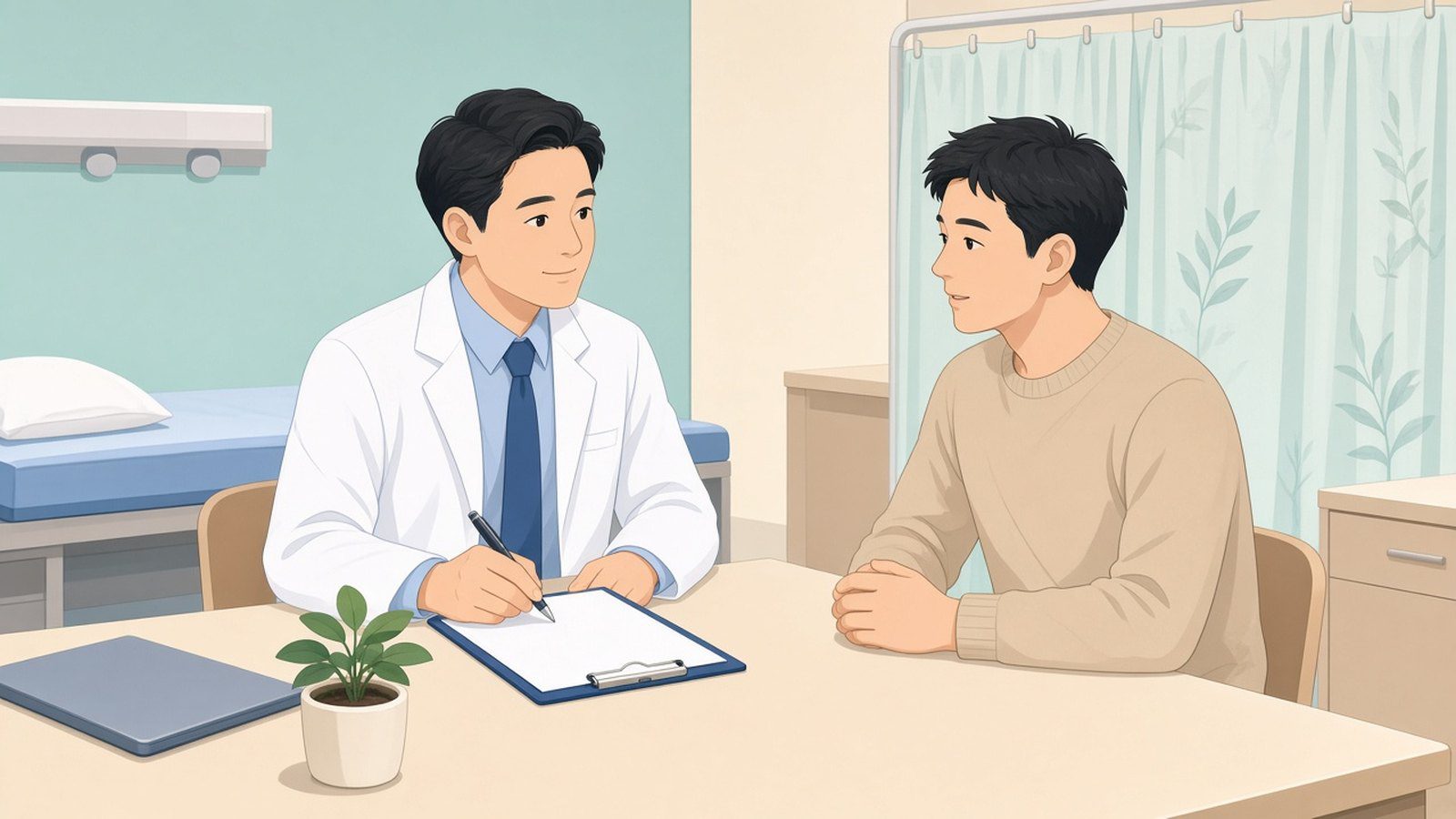
Apart from torsion, common causes of testicular pain include inflammation or infection, injury, structural problems inside the scrotum, and pain that spreads from elsewhere in the body. Accompanying symptoms and the way the pain started are important clues.
Epididymitis or orchitis is a common cause of acute scrotal pain in adults. It may be linked to urethritis, sexually transmitted infections (such as gonorrhoea) or urinary tract infections, and often causes a red, warm, swollen and tender scrotum; less often it is linked to viral infections such as mumps. If you also notice blood in your semen, see Blood in semen.
A scrotal injury from a blow, a sports injury or a riding accident can cause bruising, swelling or damage to the testicle. If pain or swelling does not settle after an injury, seek care promptly.
A varicocele often causes a heavy, dragging ache in the scrotum after standing for a long time or straining, which eases when lying down; a hydrocele or epididymal cyst mainly causes scrotal swelling, and any pain is usually mild.
An inguinal hernia can cause a bulge and aching in the groin or scrotum; if the bulge cannot be pushed back, becomes hard and the pain gets worse, seek care promptly.
Other possible causes include referred pain from ureteric stones, pain after a vasectomy or hernia surgery, and perineal and scrotal discomfort caused by prostatitis or tight pelvic floor muscles.
A painless lump in the testicle: is there nothing to worry about?
No. Testicular tumours usually show up as a painless hard lump or an enlarged testicle, and pain is uncommon. Whether or not it hurts, if you feel a lump in a testicle or notice a change in its shape or size, arrange a urology appointment for an examination.
| Possible cause | Common features | Possible evaluation |
|---|---|---|
| Testicular torsion | Sudden, severe pain on one side and scrotal swelling, often with nausea or vomiting | Immediate emergency assessment, scrotal Doppler ultrasound; surgical exploration if needed |
| Epididymitis / orchitis | Pain that builds up gradually, a red, warm and swollen scrotum; possible fever, pain on urination or urethral discharge | Urine test and culture, STI screening, scrotal ultrasound |
| Scrotal injury | Pain, bruising or swelling after a blow or sport | Physical examination and ultrasound to check for a haematoma or damage to the testicle |
| Varicocele | Heavy, dragging ache after standing or straining that eases when lying down | Examination while standing, scrotal Doppler ultrasound |
| Hydrocele / epididymal cyst | Scrotal swelling or a soft lump; pain is usually mild | Physical examination, scrotal ultrasound |
| Inguinal hernia | A bulge in the groin or scrotum that is more obvious when coughing or straining | Examination while standing and coughing; ultrasound if needed |
| Referred pain (stones, lower back or nerves) | Normal-looking scrotum; possible back pain, blood in the urine or pain linked to posture | Urine test, abdominal imaging; referral to other specialties as needed |
Pain for more than three months: understanding chronic scrotal pain
If pain in the testicle or scrotum recurs or persists for more than three months and affects daily life, it is called chronic scrotal pain (or chronic scrotal content pain). Infection, tumours, varicocele, hernia and referred pain usually need to be ruled out first.
Some chronic pain is related to past surgery or injury, such as pain after a vasectomy or hernia surgery; some is linked to nerve sensitivity, tight pelvic floor muscles or sitting for long periods; and in some men no clear cause is found even after a full evaluation.
Managing chronic scrotal pain usually takes time. Depending on the situation, the doctor may combine lifestyle changes, medicines, pelvic floor physiotherapy or nerve blocks, and surgery is discussed only for a small number of patients. Responses vary widely from person to person, so it is advisable to set goals with your doctor, attend regular follow-up and avoid repeatedly taking antibiotics or painkillers on your own.
Which tests are used to check testicular pain?
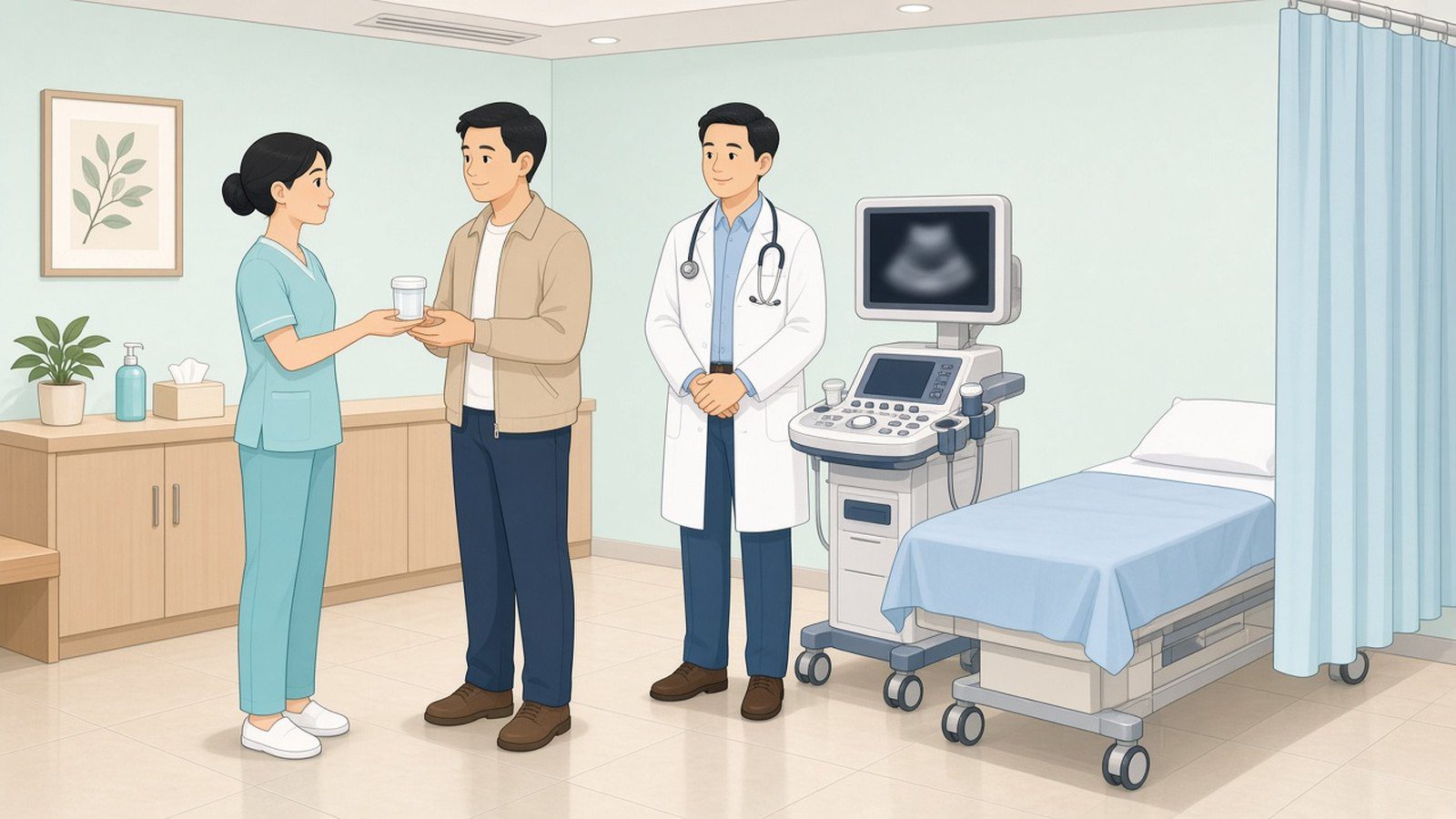
The aim of testing is first to rule out conditions that need urgent treatment and then to find the source of the pain. The doctor chooses suitable tests based on how urgent the pain is and the accompanying symptoms.
Medical history and physical examination
The doctor will ask when the pain started, whether it came on suddenly or gradually, which side it is on, whether there is fever, nausea, urinary discomfort or urethral discharge, and whether there has been a recent injury, surgery or a new sexual partner.
The physical examination includes looking at the scrotum, feeling the testicles and epididymis, checking the groin for a hernia and, if needed, examining you while standing to assess for a varicocele.
Urine and blood tests
Urinalysis and urine culture help check for a urinary tract infection; if a sexually transmitted infection is suspected, relevant screening is arranged according to exposure history. If a testicular tumour is suspected, the doctor may arrange additional blood tests.
Scrotal ultrasound and other imaging
Scrotal Doppler ultrasound shows the structure and blood flow of the testicles and epididymis and is a commonly used test for acute scrotal pain. However, the result still has to be interpreted alongside the clinical findings, and on its own it cannot completely rule out torsion.
If referred pain from stones or another abdominal problem is suspected, an abdominal ultrasound or CT scan may be arranged; for chronic pain, the spine, hips or pelvic floor muscles may be assessed as appropriate.
| Test | Main purpose | Possible limitations |
|---|---|---|
| Medical history and physical examination | Judge how urgent it is and make an initial distinction between torsion, inflammation, hernia and varicocele | Early signs can look similar; other tests are needed as well |
| Urinalysis and urine culture | Assess the likelihood of urinary tract infection or epididymitis | A normal urine test does not exclude inflammation, and an abnormal one does not rule out torsion |
| STI screening | Identify infections that may cause epididymitis | Tests are chosen according to exposure history; some results take time |
| Scrotal Doppler ultrasound | Look at the structure and blood flow of the testicles and epididymis | Results depend on the operator’s experience and must be interpreted with clinical findings |
| Abdominal ultrasound / CT | Assess referred pain from stones or abdominal problems | CT involves radiation and is arranged according to clinical need |
How is testicular pain treated, and what can you do at home?
How testicular pain is managed depends on the cause, not simply on relieving the pain. Treatment differs widely between causes, so it needs to be decided after a doctor’s assessment.
Testicular torsion needs prompt surgery to untwist the testicle and fix it in place, and the other side is usually fixed at the same time; if the testicle is badly damaged, further treatment may be needed.
For epididymitis caused by a bacterial infection, the doctor decides whether antibiotics are needed based on age and infection risk; if a sexually transmitted infection is suspected, relevant tests are arranged as well. If pain or swelling does not improve during treatment, return for reassessment.
For varicocele, hydrocele or hernia, observation or surgery is discussed according to how severe the symptoms are, how they affect daily life and the test results. Each option has its own suitable patients, limitations and risks, so discuss them fully with your doctor.

For everyday care, wear supportive, close-fitting underwear, notice positions that make the pain worse, such as standing or sitting for long periods, and follow your doctor’s advice on using cold packs or warm sitz baths to ease discomfort; use painkillers as advised by a doctor or pharmacist. These measures only relieve discomfort and cannot replace a medical assessment.
When does testicular pain need emergency care?
Most testicular pain can be assessed at a regular clinic appointment, but go to an emergency department straight away if:
You have sudden, severe pain in one testicle, or testicular pain that lasts more than an hour and does not ease with rest.
Testicular pain comes with nausea, vomiting or lower-abdominal pain, or you notice the testicle sitting higher than usual or at an unusual angle.
Pain or swelling does not settle after a blow to the scrotum.
Arrange a urology appointment soon if the scrotum is red, warm or swollen or you have a fever, you feel a lump in a testicle, a testicle changes in size or shape, or a dull ache persists or keeps coming back.
Before your visit, note when the pain started, where it is and how it has changed, any injury or fever, recent surgery or sexual contact, and the medicines you take; this helps the doctor understand your situation more quickly.
Yes, an assessment is advised. Some cases of torsion begin with brief, recurring episodes of pain that ease on their own. If this keeps happening, arrange a urology check; if the pain is severe or does not go away, go straight to an emergency department.
Sudden severe pain, pain with nausea, vomiting or abdominal pain, and pain that continues after an injury need immediate emergency care. A dull ache, heaviness or discomfort that came on slowly can first be seen at a urology clinic, where the doctor decides whether further tests are needed.
Sitting or riding for long periods can press on the perineum and cause scrotal or perineal discomfort in some men, which usually improves with a change of position and rest. If the pain persists, keeps returning or comes with urinary symptoms, a check for other causes is still advised.
Short-term swelling and pain after surgery are fairly common and usually improve gradually. If the pain keeps getting worse, comes with fever, redness or swelling, or still recurs months later, return so your doctor can check for infection, a haematoma or chronic pain.
Most testicular pain does not affect fertility in the long term once it is properly managed, but delayed treatment of torsion or some varicoceles may affect testicular function. If you are trying for a baby or have concerns, tell your doctor so this can be assessed as well.
It is possible. Torsion may come with lower-abdominal pain, children and teenagers may not mention testicular discomfort, and babies may only seem restless. If tummy pain comes with a swollen scrotum, pain on touch or an unusual way of walking, seek care promptly, going to an emergency department if needed.
Medical references
- NHS: Testicle pain
- MedlinePlus (U.S. National Library of Medicine): Testicular torsion
- European Association of Urology (EAU): EAU Guidelines on Paediatric Urology — Acute Scrotum
- American Urological Association (AUA): Diagnosis and Management of Male Chronic Pelvic Pain (CP/CPPS and Chronic Scrotal Content Pain): AUA Guideline
- Ziegelmann MJ, Farrell MR, Levine LA. Evaluation and Management of Chronic Scrotal Content Pain—A Common Yet Poorly Understood Condition. Reviews in Urology (2019)
Advice from a urologist
- For sudden, severe pain in one testicle, especially with nausea, vomiting or abdominal pain, go straight to an emergency department; do not wait at home or rub the area.
- For a dull ache, heaviness or a red, swollen scrotum that develops gradually, book a urology appointment so the doctor can look for causes such as inflammation, varicocele or hernia.
- If you feel a lump in a testicle or notice a change in its size or shape, have it checked soon even if it does not hurt.
- If the pain recurs or lasts more than three months, work through the evaluation step by step with your doctor and avoid repeatedly taking antibiotics or painkillers on your own.
Most testicular pain is not an emergency, but sudden severe pain should not be left to wait. Paying attention to how the pain started and what symptoms come with it, and getting assessed early, helps find the cause and choose suitable treatment. If you have pain in the testicles or scrotum, have a urologist assess you in person.