
When changing a baby’s diaper and noticing one side of the scrotum looks larger, or feeling a swollen, water-balloon-like lump in your own scrotum while showering, many people immediately wonder: could this be a tumor? In fact, one of the most common causes of this kind of painless, soft swelling is a hydrocele. This article explains in plain language the differences between pediatric and adult hydrocele, how to tell it apart from an inguinal hernia, and when to simply observe versus when to seek treatment.
What Is a Hydrocele?
The testicle is surrounded by a thin pouch-like membrane called the tunica vaginalis. Normally, there is only a small amount of lubricating fluid inside the tunica vaginalis, which is continuously produced and reabsorbed. When too much fluid is produced, reabsorption decreases, or fluid from the abdominal cavity flows in, fluid accumulates inside the tunica vaginalis and makes the scrotum look swollen. This condition is called a hydrocele.
A hydrocele can occur on one side or both sides. It is usually painless and feels soft and elastic, though a large amount of fluid can cause a heavy, dragging sensation.
How Do Pediatric and Adult Hydroceles Differ?
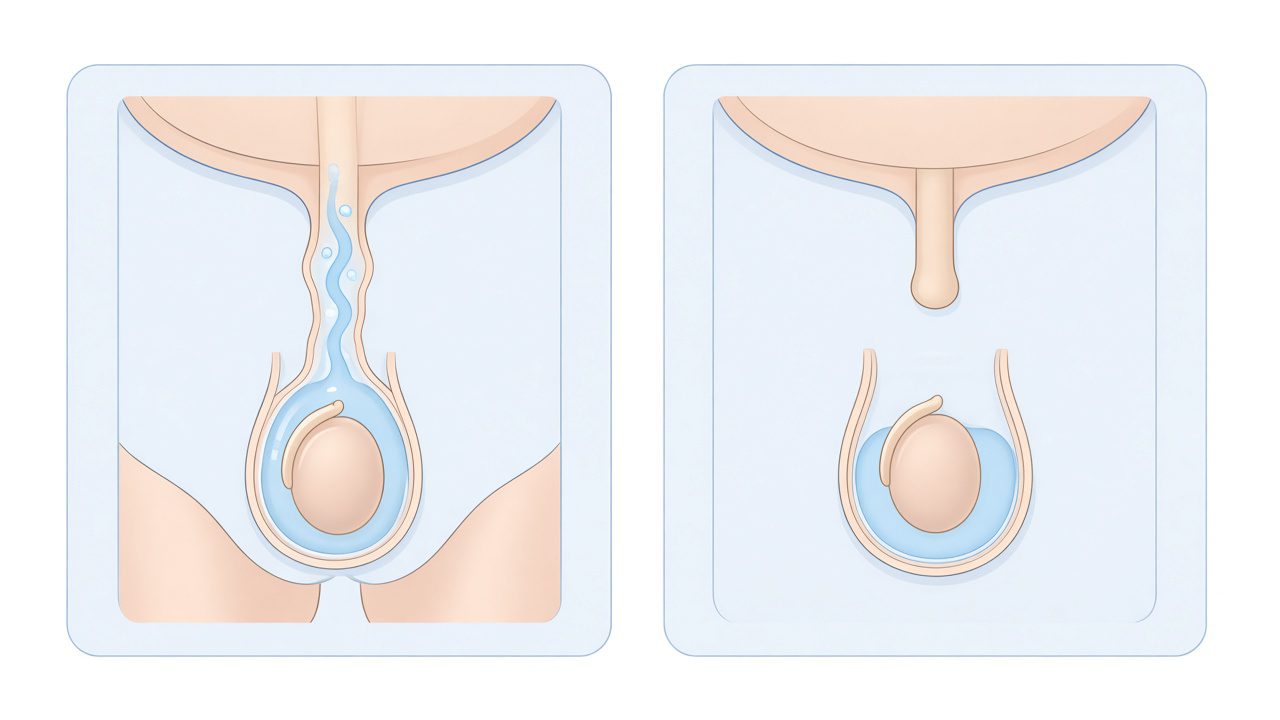
Pediatric (Congenital, Communicating) Hydrocele
During fetal development, the testicles descend from the abdomen into the scrotum through a passage called the processus vaginalis. This passage normally closes on its own around the time of birth. If it fails to close completely, fluid from the abdominal cavity can flow through the channel into the scrotum, forming a communicating hydrocele.
- Quite common in newborns, and even more frequent in premature infants
- In many babies, the passage closes on its own around one year of age, and the fluid disappears with it
- A classic feature is fluctuating size: it gets larger when crying, standing, or straining, and smaller when sleeping or lying flat
- If the passage is relatively wide, part of the intestine may also slip through, turning it into an inguinal hernia
Adult (Acquired, Non-Communicating) Hydrocele
In adults, a hydrocele is usually not caused by fluid flowing down from the abdomen, but rather by excess secretion or poor absorption by the tunica vaginalis itself. The size of the swelling tends to stay relatively constant and does not shrink when lying flat. It is most common in middle-aged and older men, and may also develop after injury or inflammation.
Common Causes of Hydrocele
- Unclosed congenital passage: The primary cause of communicating hydrocele in children, due to an open processus vaginalis.
- Idiopathic hydrocele of unknown cause: The most common type in adults, enlarging gradually without an identifiable trigger.
- Inflammation or infection: Reactive fluid accumulation in the tunica vaginalis following epididymitis or orchitis.
- Trauma: Following a direct blow to the scrotum or sports injury.
- Post-surgical: Impaired lymphatic drainage after procedures such as inguinal hernia repair or varicocele surgery.
- Underlying testicular conditions: In rare cases, testicular torsion or a testicular tumor is accompanied by a hydrocele, which is why a newly discovered hydrocele in an adult should be evaluated.
- Abdominal fluid accumulation: In conditions such as liver cirrhosis with ascites, fluid may travel down a patent passage into the scrotum.
What Are the Symptoms of a Hydrocele?
- Swelling on one or both sides of the scrotum that feels like a water balloon
- Usually painless, though larger amounts of fluid can cause heaviness or discomfort when walking or sitting for long periods
- Children: Size fluctuates throughout the day—smaller in the morning, larger in the evening or after crying
- Adults: Size stays relatively constant and increases slowly over time
- When fluid volume is very large, the testicle inside may be hard to feel, and wearing trousers, urinating, or sexual activity may be affected
If scrotal swelling is accompanied by significant pain, redness, warmth, or fever, inflammation or another acute condition is more likely; see What Causes Testicular Pain? and What Is Epididymitis?.
How to Distinguish a Hydrocele from a Hernia and Other Scrotal Swellings
| Condition | Common Features |
|---|---|
| Hydrocele | Soft, feels like a water balloon, mostly painless, transmits light when shone with a flashlight |
| Inguinal hernia | Bulge in the groin or scrotum, enlarges when straining and can be pushed back when lying flat, bowel sounds may be heard; if incarcerated, causes pain, firm swelling, and vomiting |
| Epididymitis, orchitis | Swollen and painful, often accompanied by fever and urinary discomfort |
| Varicocele | Feels like a bag of worms, more noticeable after standing for a long time |
| Testicular tumor | A firm mass felt on the testicle itself, usually painless and does not transmit light |
| Testicular torsion | Sudden, severe pain; a medical emergency |
Pediatric hydrocele and inguinal hernia often coexist and look very similar from the outside; for details, see Inguinal Hernia and Its Types. Other causes of scrotal enlargement are summarized in What Causes Scrotal Swelling?.
How Is a Hydrocele Diagnosed?
- Medical history and physical exam: The doctor will ask how long the swelling has been present, whether its size changes, and whether there is pain or prior injury. They will gently examine the testicles, epididymis, and groin, and ask you to cough or bear down to see if the swelling changes.
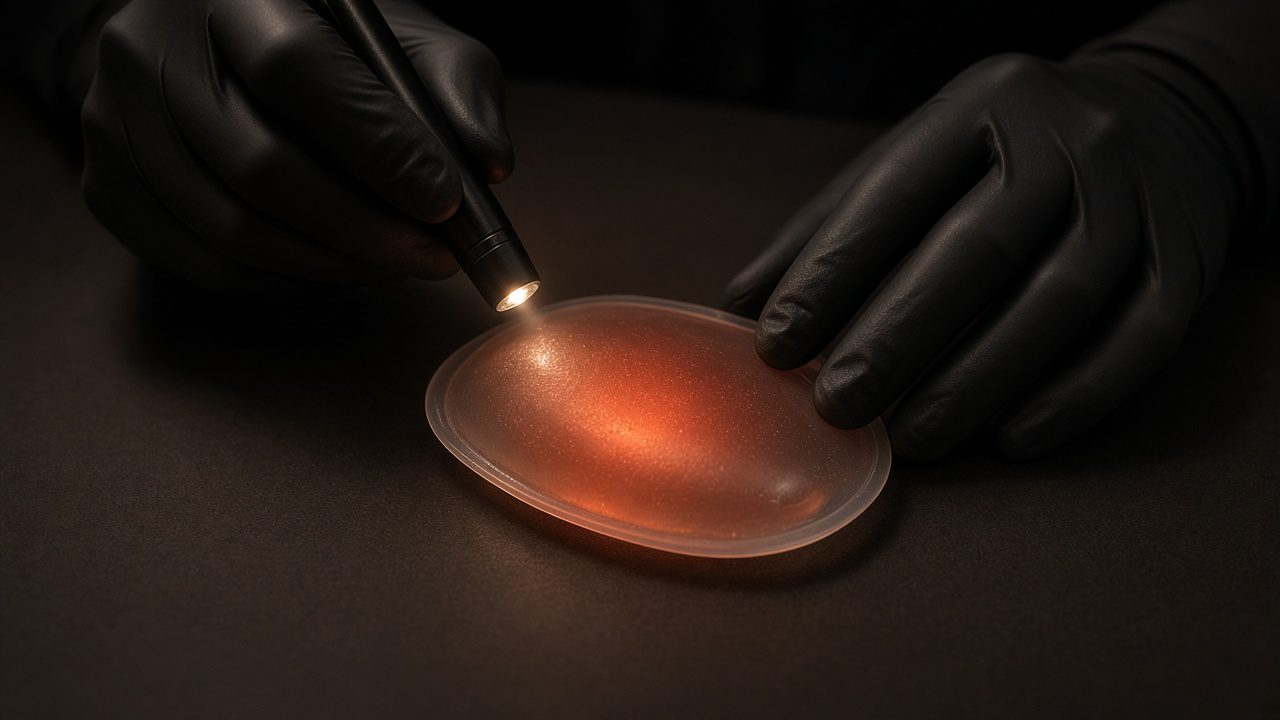
- Transillumination test: Shining a flashlight directly against the scrotum. Because a hydrocele contains clear fluid, it glows with a reddish light, whereas a solid mass or blood clot will not let light through.
- Scrotal ultrasound: The most commonly used imaging test. It confirms fluid accumulation, clearly evaluates the testicle and epididymis surrounded by fluid for any underlying issues, and helps determine whether an inguinal hernia is also present. Ultrasound is generally recommended for any newly developed hydrocele in an adult.
- Other tests: A urine test if infection is suspected; blood tests and further evaluation if a testicular tumor is suspected.
How Is a Hydrocele Treated?
Observation and Follow-up
- If a pediatric hydrocele is not accompanied by an inguinal hernia, many cases can be safely observed until past one year of age before deciding whether intervention is needed.
- In adults, if the fluid volume is small, causes no discomfort, and examination rules out other conditions, regular follow-up is an option.
- Reactive fluid buildup caused by inflammation or trauma often subsides gradually once the underlying problem is treated.
Surgery
There is no oral medication that can make a hydrocele go away. Your doctor will discuss surgery in the following situations:
- A pediatric hydrocele persists past the observation period or is accompanied by an inguinal hernia
- An adult hydrocele is large or continues to grow, causing heaviness, pain, or interfering with daily activities or appearance
- Examination raises suspicion of another testicular condition that requires management
In children, surgery is usually performed through a small groin incision to tie off the open processus vaginalis; in adults, the tunica vaginalis itself is repaired or excised. For surgical techniques, anesthesia, and postoperative care, see Hydrocele Surgery (Hydrocelectomy).
Is Fluid Aspiration an Option?
Drawing the fluid out with a needle can temporarily reduce the swelling, but the fluid easily returns and carries risks of infection and bleeding. It is generally reserved for special situations where surgery is not suitable and should be discussed with your doctor.
When Should You See a Doctor?
Schedule an evaluation with a urologist (or pediatric surgeon for children) if:
- You notice scrotal swelling for the first time and are unsure of the cause
- A child still has fluid past around one year of age, or the swelling fluctuates in size and an inguinal hernia is suspected
- An adult hydrocele keeps getting larger or interferes with daily life
- The swelling is accompanied by a firm lump on the testicle
Seek immediate medical attention or go to the emergency room if:
- There is sudden, severe pain in the scrotum or testicle
- A lump in the groin or scrotum becomes hard and cannot be pushed back, accompanied by abdominal pain, vomiting, or inconsolable crying and poor feeding in a baby
- The scrotum is red, swollen, warm, and painful, or accompanied by fever
Frequently Asked Questions (FAQ) About Hydrocele
Many pediatric hydroceles resolve on their own around one year of age. Adult hydroceles rarely disappear without treatment, but if the fluid volume is small and does not affect daily life, observation and follow-up are reasonable.
A hydrocele itself does not turn into cancer and generally does not directly harm sperm. However, a small number of hydroceles are secondary to other testicular issues, so an examination is still recommended when swelling is first noticed.
Both are related to an unclosed processus vaginalis, but a hydrocele contains fluid, whereas an inguinal hernia involves intestine or omentum slipping into the passage. Because a hernia carries the risk of incarceration, it is treated more proactively.
Not necessarily. If it is a simple hydrocele without an inguinal hernia, most cases can be observed first. However, if the bulge changes size rapidly, can be pushed back in, or the baby cries inconsolably or vomits, seek medical care promptly.
There is currently no medication that can eliminate hydrocele fluid. If it is a reactive hydrocele caused by inflammation, the fluid may gradually improve after the inflammation is treated; when definitive treatment is needed, surgery is the main approach.
For a newly developed hydrocele in an adult, a scrotal ultrasound is recommended to confirm that the testicle and epididymis surrounded by fluid have no underlying abnormalities.
Medical References
- MedlinePlus (U.S. National Library of Medicine): Hydrocele
- Cleveland Clinic: Hydrocele
- StatPearls (NCBI Bookshelf): Hydrocele
- UCLH NHS Foundation Trust: Hydrocele
Further Reading
- What Causes Scrotal Swelling?
- Hydrocele Surgery (Hydrocelectomy)
- What Causes Testicular Pain?
- What Is Epididymitis?
- Inguinal Hernia and Its Types
Urologist’s Advice
A hydrocele is usually a benign, painless condition, so there is no need to panic. Still, when scrotal swelling is noticed for the first time, it is best to have a doctor examine it and perform an ultrasound to rule out other causes. For babies, if the swelling fluctuates significantly in size or is accompanied by persistent crying or vomiting, please seek medical attention promptly.
This article is for health education purposes only and does not replace a physician’s diagnosis; please seek medical care if you feel unwell.