


The testes are male reproductive organs located on either side of the scrotum. Their primary functions are to produce sperm and secrete hormones. The long axis of each testis measures approximately 2.5 to 4.5 cm. On palpation, a normal testis feels smooth and elastic, with no obvious hard masses. The testes are highly sensitive to external pressure; compression commonly causes a sensation of fullness, pain, or discomfort.
Physiologically, one normal testis is generally sufficient to maintain normal sperm production and hormone secretion and usually does not affect male characteristics, fertility, or sexual function. However, recent studies indicate that men who undergo unilateral orchiectomy have an 85% chance of experiencing some degree of deterioration in semen quality, potentially resulting in oligospermia or azoospermia. Regular monitoring of semen quality is therefore recommended.
Many patients are missing one or both testes for various reasons, resulting in a smaller or asymmetrical scrotal appearance. Statistics suggest that the effect of testicular loss on a man’s body image is comparable to the effect of mastectomy on a woman’s body image, affecting self-perception, masculine confidence, quality of life, and even normal sexual activity.
Testicular Prostheses
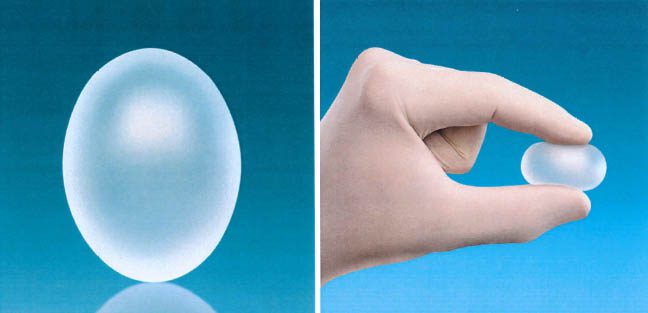
Solid silicone-rubber testicular prostheses with high tissue compatibility were developed and introduced into clinical practice in the 1960s; however, their texture was firmer than that of natural testes. The refined testicular prosthesis is an oval-shaped implant made of a softer, more flexible silicone elastomer (Figure 1). Unlike gel-filled and saline-filled silicone prostheses, its low hardness is intended to provide a consistency closer to that of a natural testis, while its solid construction eliminates the risks of leakage and shell deflation. It is available in various sizes to accommodate individual anatomical needs and is surgically implanted into the scrotum to replace a missing testis and restore a normal scrotal appearance. The prosthesis may be implanted either immediately at the time of orchiectomy or during a subsequent procedure.
Purpose of Surgery
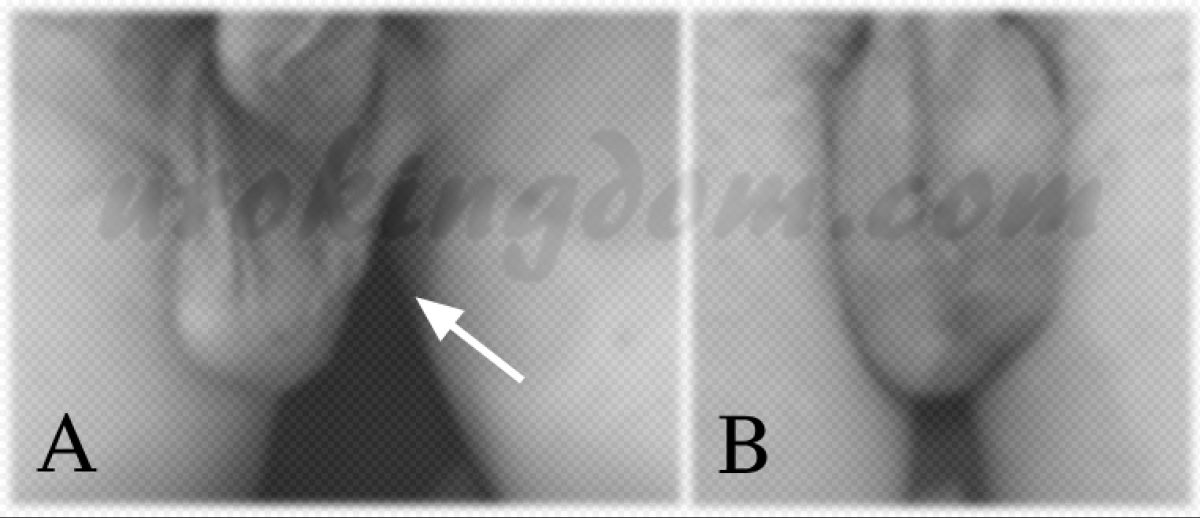
To reconstruct the scrotum and restore its visual symmetry (Figure 2).
Surgical Indications
- Previous surgical removal of one or both testes due to conditions such as cryptorchidism, testicular torsion, traumatic testicular rupture, testicular abscess, testicular cancer, or prostate cancer
- Testicular atrophy
- Testicular hypoplasia or congenital absence of one or both testes
Anesthesia
Traditionally, the procedure is performed under spinal or general anesthesia, including intravenous sedation.
Our clinic utilizes an advanced dual local-anesthesia technique, in which a local anesthetic is injected only into the scrotal surgical site. The patient remains awake and pain-free during the procedure and may use a mobile phone or Bluetooth earphones.
Incision
A single incision, approximately 2–3 cm long, is made in the groin, upper scrotum, or along the scrotal midline.
Hospitalization
Neither hospitalization nor postoperative observation is required.
Surgical Procedure
The patient lies in a supine position. Precise dual local anesthesia is administered at the surgical site to prolong its effective duration. An appropriate location in the groin or scrotum is selected, and a linear incision is made. The fascial tissue beneath the incision is carefully dissected while preserving adjacent blood vessels and healthy tissue. A pocket is created for placement of the testicular prosthesis. The incision is then closed with fine sutures and covered with sterile gauze and a dressing.
Features of Our Surgical Approach
- Advanced dual local anesthesia: a highly safe anesthetic approach that avoids the risks associated with spinal or general anesthesia, including intravenous sedation. It also prolongs the duration of anesthesia and provides better control of postoperative wound pain.
- Single small incision
- No hospitalization or postoperative observation is required. Patients may walk and return home to rest immediately after surgery.
- Electrocautery is not required for hemostasis, thereby minimizing tissue damage. If electrocautery is used to control bleeding during surgery, it may injure nearby arteries or nerves, causing altered sensation, numbness, or chronic pain. Arterial injury may also result in local ischemia and tissue necrosis. Numerous medical reports indicate that electrocautery damages local tissue; cauterized areas lose their blood supply and become less resistant to bacteria, increasing the risk of wound infection and inflammation. Even in the absence of infection, wound healing may be impaired.
- Meticulous microsurgical techniques are utilized to improve surgical safety and reduce potential complications. Other related procedures performed at our clinic—including minimally invasive circumcision, microsurgical no-scalpel vasectomy, subinguinal microsurgical varicocelectomy, refined penile venous stripping surgery, penile prosthesis implantation, correction of penile curvature, dorsal penile nerve block surgery, penile augmentation, hernia repair, and hydrocelectomy —are performed according to the same principles and are therefore relatively safe.
Prognosis
In general, some swelling, pain, or discomfort at the surgical site and in the scrotum may occur after surgery. These symptoms can usually be adequately managed with oral analgesics and will gradually subside. Any procedure involving an artificial implant carries a risk of infection. Antibiotics are therefore administered before and after surgery to prevent infection, and the overall risk of infection ranged from 0.6 to 2%. Other possible complications include chronic scrotal pain, hematoma, scrotal skin necrosis, poor wound healing or wound dehiscence, scrotal contraction, displacement of the prosthesis, erosion through the scrotal wall or extrusion from the scrotum, and excessive scar-tissue formation. In addition, saline-filled silicone testicular prostheses take a risk of specific complications, including prostheses-related discomfort or pain (3%), extrusion (2.6%), scrotal edema (1.3%), infection (1.3%), deflation (0.7%), and pulmonary embolism (0.7%). Gel-filled silicone testicular prostheses were associated with several potential complications, including silicone-gel leakage or rupture, particle shedding and migration, connective-tissue disorders, autoimmune reactions, and concerns about tumor formation. Rare cases of spontaneous rupture have also been reported more than 30 years after implantation. These safety concerns ultimately contributed to the discontinuation of gel-filled silicone testicular prostheses in the 1990s. All surgical and medical procedures involve some degree of risk; however, skilled and meticulous surgical techniques can minimize the incidence of complications.
Conclusion
Testicular prostheses implantation with refined testicular prosthesis carries high success rate, low morbidity, limited postoperative pain and good cosmesis. Although a testicular prosthesis has no physiological function, testicular loss can have a substantial impact on body image. Testicular prostheses implantation restore the integrity and visual symmetry of the scrotum and can help rebuild masculine confidence, improve quality of life, and maintain a satisfying sex life. Before surgery, patients may consult a qualified physician to discuss the appropriate timing of implantation and to ensure adequate psychological preparation and understanding.
Note 1: Source: https://promedon-upf.com/product/n-s
Publications
- Hsu GL, Hsieh CH (謝政興), Chen HS, Ling PY, Wen HS, Liu LJ, Chen CW, Chua C. The advancement of pure local anesthesia for penile surgeries: can an outpatient basis be sustainable (純粹局部麻醉施行陰莖手術的新進展)? Journal of Andrology. 28(1):200-205, 2007.
- Hsu GL, Zaid UX, Hsieh CH (謝政興), Huang SJ. Acupuncture assisted local anesthesia for penile surgeries (針灸輔助局部麻醉下施行陰莖手術). Translational Andrology and Urology. 2(4):291-300, 2013.
- Hsu GL, Hsieh CH (謝政興), Wen HS, Hsu WL, Chen YC, Chen RM, Chen SC, Hsieh JT. The effect of electrocoagulation on the sinusoids in the human penis (電燒止血對於人類陰莖海綿體的影響). Journal of Andrology. 25(6):954-959, 2004.
References
- P. J. Turek, V. A. Master, and the Testicular Prosthesis Study Group, “Safety and Effectiveness of a New Saline Filled Testicular Prosthesis,” Journal of Urology 172, no. 4 Part 1 (2004): 1427–1430.
- Araújo, A. S., Anacleto, S., Rodrigues, R., Tinoco, C., Cardoso, A., Oliveira, C., & Leão, R. (2024). Testicular prostheses—Impact on quality of life and sexual function. Asian Journal of Andrology, 26(2), 160–164. https://doi.org/10.4103/aja202325
- Catanzariti, F., Polito, B., & Polito, M. (2016). Testicular prosthesis: Patient satisfaction and sexual dysfunctions in testis cancer survivors. Archivio Italiano di Urologia e Andrologia, 88(3), 186–188. https://doi.org/10.4081/aiua.2016.3.186
- Clifford, T. G., Burg, M. L., Hu, B., Loh-Doyle, J., Hugen, C. M., Cai, J., Djaladat, H., Wayne, K., & Daneshmand, S. (2018). Satisfaction with testicular prosthesis after radical orchiectomy. Urology, 114, 128–132. https://doi.org/10.1016/j.urology.2017.12.006
- Hayon, S., Michael, J., & Coward, R. M. (2020). The modern testicular prosthesis: Patient selection and counseling, surgical technique, and outcomes. Asian Journal of Andrology, 22(1), 64–69. https://doi.org/10.4103/aja.aja_93_19
- Nichols, P. E., Harris, K. T., Brant, A., Manka, M. G., Haney, N., Johnson, M. H., Herati, A., Allaf, M. E., & Pierorazio, P. M. (2019). Patient decision-making and predictors of genital satisfaction associated with testicular prostheses after radical orchiectomy: A questionnaire-based study of men with germ cell tumors of the testicle. Urology, 124, 276–281. https://doi.org/10.1016/j.urology.2018.09.021
- Ramos, S. A., Pinheiro, A. M., Barcelos, A. P., Cardoso, A. P., & Varregoso, J. (2022). Satisfaction with testicular prosthesis: A Portuguese questionnaire-based study in testicular cancer survivors. Revista Internacional de Andrología, 20(2), 110–115. https://doi.org/10.1016/j.androl.2020.10.006
- Robinson, R., Tait, C. D., Clarke, N. W., & Ramani, V. A. C. (2016). Is it safe to insert a testicular prosthesis at the time of radical orchidectomy for testis cancer? An audit of 904 men undergoing radical orchidectomy. BJU International, 117(2), 249–252. https://doi.org/10.1111/bju.12920
- Srivatsav, A., Balasubramanian, A., Butaney, M., Thirumavalavan, N., McBride, J. A., Gondokusumo, J., Pastuszak, A. W., & Lipshultz, L. I. (2019). Patient attitudes toward testicular prosthesis placement after orchiectomy. American Journal of Men’s Health, 13(4), 1–8. https://doi.org/10.1177/1557988319861019
- Zhang, F., Gao, S., Xie, L., Yin, T., Sha, Y., & Yuan, S. (2025). Advances and clinical applications of testicular prostheses. Andrologia, 2025, Article 5760800. https://doi.org/10.1155/and/5760800